

More Important Points About Reinforcers
Two More Important Points about Reinforcers
We want to make two more points about picking reinforcers. One is to use very small pieces. If it’s a piece of food, it can be a small piece of a chip. If it’s an activity, it can be 5-10 seconds of blowing bubbles. The important thing is that you don’t want the child to get tired of the reinforcer. If she gets tired of it, then it won’t work as a reward. Notice how this teacher is using only tiny licks of a lollipop as a reward while teaching a new word. This way, she’ll have lots of practice trials with one lollipop and the child is enjoying the game!
Later on, the same teacher is teaching the little boy the emotion word, “angry” and using only tiny pieces of a cookie as a reward.
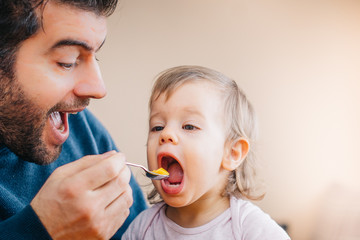
The second point is this: If there’s a special treat or two that your child likes a lot but doesn’t need to get his nutrition, like a cookie or a chip, you can save that treat to use as a reward. If you use a favorite treat mostly or only as a reward, then it will work better as a reinforcer. It works much better if the reward is special. The reward should not be something to which the child has free access. Sweet or salty treats, like candy, cookies and chips should be limited anyway as they are generally not healthy in large quantities.
You should have at least a few different rewards in a learning session. That way, your child won’t become bored with each one. For example, you might use a salty treat at the beginning of the learning session, but then you might offer sips of juice later on. And you could give your child a small toy to play with briefly, and next time use a small piece of a sweet treat.
In the following clip, the teacher gives the child a choice between two activities that she likes. When the child chooses bubbles, the teacher models the word and “B” sound and rewards the child’s attention by blowing lines of bubbles and showing her how to pop them. In the second video, the teacher rewards the child with a little soft brushing, which he loves.
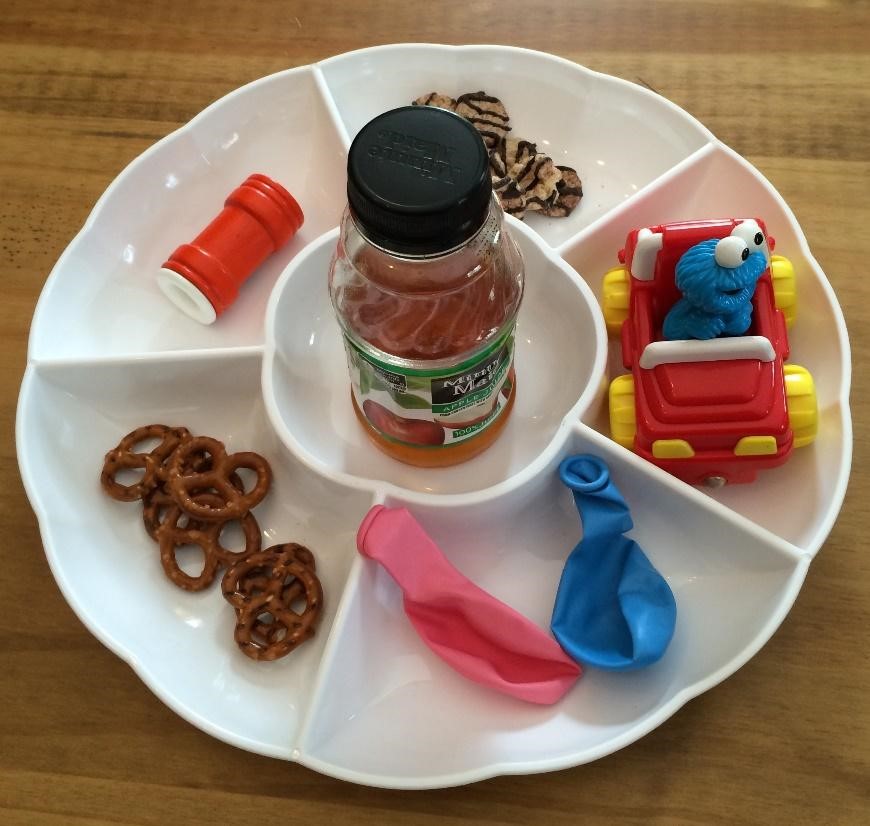
Here is an example of a group of rewards that has been prepared for a teaching session. Placing small amounts of different rewards in the sections of the plate can be an easy way to keep them separate, easy for your child to see, and easy for you to use.
Here are some other ideas about things that work well as rewards for some children. Play Doh or clay is a great reinforcer. You or your child can roll out some of the clay. Then you can offer her a choice of cookie cutters to press into the clay.
And some children just enjoy squeezing the Play Doh or pressing their fingers into it.
Children’s markers or crayons are a fun way for children to try out coloring. See how the little boy in the next clip earns his markers. Then he is prompted to ask for help to open the box they are in and take off the top.
You might also see that when he shows good attention or makes a correct match, his teacher praises him. He also puts a yellow circle, called a token, on his token board. When all of the spots are filled, he gets the reward shown on the token board. We’ll talk more about token boards in a later module.
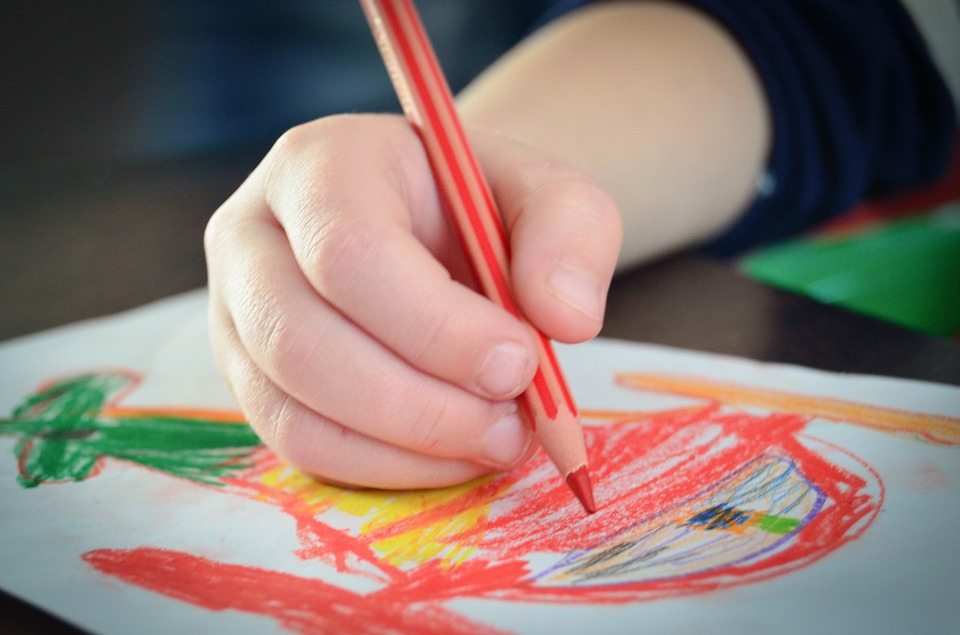
If your child knows how to paint, that can be a special treat. If you want to give only a quick reward, you can have your child add to her picture a little at a time.
If you are worried about a mess, there are paint with water books for children. Many children enjoy coloring with crayons too. In the next clip, you’ll see a little boy who loves to color. He is being taught to ask for things by pointing. His teacher is helping him form his fingers into a point to ask for crayons. His reward is coloring his picture.
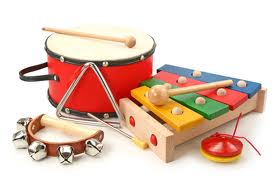
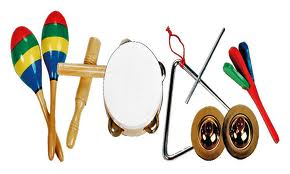
Some children really like mirrors, and others really like making music. In the next clip, a child is learning to do a puzzle. When she is finished, she gets reinforced with music. (She plays a drum while her teacher sings a song). Notice that she gets this reward even though she needed some prompts.
In the next two clips, watch how the teachers use music as a reinforcer, stopping for eye contact before continuing with their songs.
And who can resist a big, “squeezy” hug?
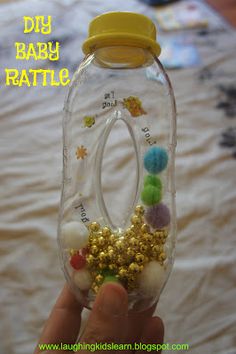
There are many different kinds of toys you can buy, but you can also make them yourself. For example, see the picture below of a plastic jar filled with small beads, that your child can shake. If you make something like that, be sure to keep the top on tight so your child cannot get the beads out – they are a choking danger.
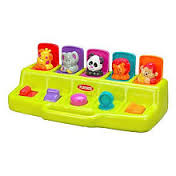
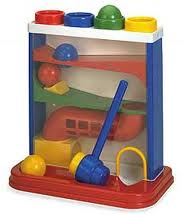
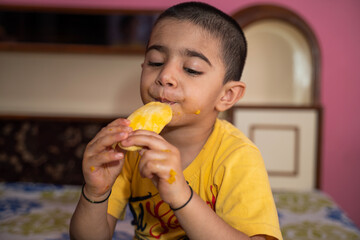
Pay attention to what your child likes to do or which toys she likes. That is a good way to get ideas about other things that might be good rewards for her. When you use food rewards, it’s a good idea to sometimes put small pieces of two or three different food treats she likes in front of her. Then watch to see which one she reaches for first. Try using that treat as your reward for a few minutes. Then try a different reward.
If you are not sure what she would like at the moment, you can test it by offering her pieces of two things and seeing which one she chooses. When you do that, you should let her have the piece she chose, and then use it as your next reward too. You don’t want to offer her something and then take it away.
Whether you are using praise, tickles, food treats, music, bubbles, or toys, the important thing to remember is this: By rewarding your child right after she does what you want her to do, you are reinforcing (strengthening) the behavior and making it more likely that she will do it again. Second, you are letting your child know that she has done the correct thing. So, the reward teaches the child what the correct behavior is, while also making her more likely to do it.
By using different rewards and pairing those rewards with your praise, you are also teaching your child to want to pay attention to you and that learning new things can be fun. This is a good way of building cooperation or teaching your child to try her best to do what you have asked.
Sometimes a reward you think your child likes a lot doesn’t seem to work. What could be going on? There are lots of possible reasons: The thing you are trying to teach might be too hard for your child; she may not be ready for it. Try teaching a similar skill, but one that is much easier She may be tired, hungry, or cranky; if she’s not in a good mood for learning, give her an easy thing to do, reward and praise her, and give her a break.
Perhaps you weren’t ready with the reward and waited too long between the behavior and the reward – the ideal time between behavior and reward is actually a second or even less. Perhaps she is getting tired of your reinforcer; try a different one. Perhaps she was doing ok with your prompting her, but can’t yet do what you want without a prompt; in this case, go back to a full, gentle, physical prompt and fade your prompts away more slowly.
If your child has a lot of interfering behaviors that prevent her paying attention to you, or trying to do what you are asking, go to Module 6, where we deal with interfering behaviors, and see if some ideas there can help. Visual schedules that show learning time, followed by a favorite activity, like playing outside, or going to the park, may work, especially if you keep the learning sessions short.
If you are going to a new place (like taking your child to a food market), you could make some pictures so she knows what to expect (for example, picture of car or bus, picture of market, picture of child putting food in the cart, child getting treat). We will have more to say about picture schedules in the next few modules.
WHAT IS A NATURAL REINFORCER?
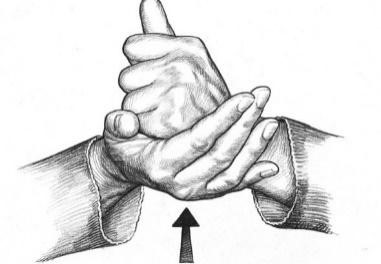
Often, when your child does something, it will result in a reward that just happens naturally. For example, when you teach a child to ask for help, getting the help she needs will be a natural reward. This is the sign for “help.” To sign “help,” make a fist with your thumb up. Put that hand on the palm of your other hand and move both hands up together. If this is hard for your child, you should accept anything similar that she can do.
In the next clip, watch as the teacher puts a favorite toy car into a container. The little boy loves this car. But he doesn’t know how to open the container by himself. So a second teacher prompts him to use a sign to ask for help. The reward for asking for help is that when the container is opened, he gets the toy car.
Here’s another example of a natural reinforcer. This little boy is using a modified sign to ask for help. He is being taught to raise his hand straight up over his head to ask for help. He needs help to remove the wrapping on a new Play Doh container. This little boy has already learned to imitate. So his teacher can show him how to ask for help. His reward for asking for help is that he quickly gets the Play Doh.