

The Concepts Of Maintenance and Generalization
Maintenance
Keep practicing even after mastering a skill. If you stop practicing before your child uses the skills in everyday situations, she might forget. Make sure your child practices often to keep up with what she’s learned. This goes for each new skill until your child starts using them in their daily interactions with you and others. Practice and repeating are needed for children to master things. Even after mastering a skill, provide practice during special sessions to avoid forgetting.
Introduce new items with the ones your child has already mastered. If your child learned to clap, sit down, and stomp her feet, and you’re now teaching arms up, mix up these instructions. This helps your child keep up their mastered skills while learning new ones.
Generalization
Practice the skill in many places, not just during special learning times. The natural environment is anywhere at home or in the community, outside of the special sessions. For example, if your child imitates you well during sessions, have her practice in kindergarten or daycare. When the teacher leads a song with hand motions, help your child join in. If your child doesn’t attend kindergarten or daycare, teach her to copy your hand movements while singing at home with siblings or friends.
If your child is learning to ask for things, remind her to ask throughout the day when she wants something. Getting what she asks for will naturally reinforce her. In the following video clip, a little boy practices choosing and pointing to his snack. The teacher asks him to pick something from the kitchen cabinet.
And here he is choosing what he would like to drink with his snack.
How Will You Know If New Skills Are Being Practiced Enough?
You should encourage your child to practice her new skills in the natural environment whenever possible. You should also continue to practice mastered skills once or twice a week. You’ll know if this isn’t enough practice if your child stops doing as well as she had on the mastered skills. You want to keep practicing new skills until they become very easy for your child. And if, by chance, you do see your child beginning to forget how to do something she had learned to do well, just go back to daily practice and she should pick it back up again.
Practice Skills Wherever You Want Your Child to Use Them
You might be teaching your child a skill like making good eye contact or pointing to request something, like bubbles, during special learning sessions. Then, one day, your child does it at the park. That’s great! It’s an example of what we call generalization, which means your child is starting to understand the new skill in different settings. When that happens, make sure to praise and reward that behavior with enthusiasm. Your goal is for your child to use the skill not only during learning sessions but also in real life, in the natural environment.
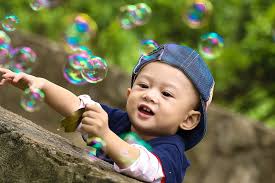
If a skill is reinforced in one place, it’s more likely to happen there again. The more places the child practices the skill and receives reinforcement, the more it is automatic for them. Your goal is for the child to perform the skill anywhere. For instance, if you’re teaching your child to ask for bubbles during learning sessions, remember to bring bubbles when you go to the park or for a walk. This gives her opportunities to ask for bubbles in different settings.
Practice the Skill in Different Situations and in Slightly Different Ways
You may be surprised to see that after your child learns a new skill in one situation with one person, she doesn’t seem to know how to do it in another situation or with another person. She may not respond correctly unless you use the exact same language. Or perhaps only if you do things in the exact same way as when she learned the skill. These are very common problems. For example, if a child has learned to wave goodbye to her father when he goes to work in the morning, she may not know that she should wave goodbye to him at other times. This also goes for waving goodbye to her sister when she goes to school, or goodbye to a friend when leaving the park. Some children have to practice a new skill in many different situations before they figure out what it really means.
It’s also important to change the way you do or say things. For example, if Daddy says, “Bye-Bye,” each time he waves goodbye, it would be a good idea to change it up now and then, once the child is consistently returning the wave. For example, he could say, “Good-bye,” or “So long.” Just remember that when you change things up, you may need to prompt and reinforce the child’s response for a while. This is particularly true when you use language that’s a little different or slightly change the condition in which the skill occurs.
Your child may need lots of practice in different situations and with different people to understand that waving goodbye is what you do when someone is leaving and also when she is the one leaving. Without this extra practice the child might continue to wave goodbye only when Daddy leaves in the morning, and only if he says, “Bye-Bye,” if that’s where and how she first learned the skill. The basic rule is to try to give your child a chance to practice each new skill in several different places, with at least a couple of different people, and using some variation in the instruction or the condition in which the skill occurs. When an opportunity presents itself in places other than your special learning area, encourage your child as you would during your learning sessions, by prompting her if she needs help to do the skill that you want her to practice. And don’t forget to reward her once she has finished doing what you have asked or prompted her to do.
Try to give your child a chance to practice each new skill in several different places with at least a couple of different people.
Maybe you are teaching your child to ask for cookies using eye contact and pointing. Later, when you are cooking dinner, your child sees the milk on the counter. She looks at you and points to the “milk.” This is an example of generalization. It’s a good sign that your child is beginning to really understand requesting.
Be Sure to Reinforce the Spontaneous Use of New Skills with Enthusiasm
In the case of a child asking for milk she sees on the counter, the best reward you can give her is exactly what she asked for. That would be a drink of milk, paired with enthusiastic praise. In fact, if this happens when your child is just beginning to generalize requesting skills, you should stop whatever you are doing. Try to give her some milk immediately, while letting her know how happy you are to know what she wants! Even if you had not planned to give her milk until dinner, you should try to give her at least some of her milk for requesting it spontaneously.
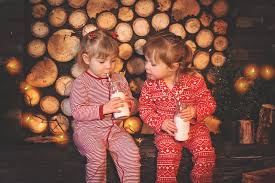
Imagine your child points to ask for milk from someone in the family. Maybe it’s a family member who hasn’t taught her how to ask by pointing. But that’s okay because it shows she’s learning how to make requests and getting better at using this new skill with others.
Remember, you will get more of whatever you pay attention to and behavior that is followed by immediate reinforcement will be more likely to occur in the future! Be on the look-out for “the good stuff” and pay attention to it whenever you see it happening.
In general, when you are not having a learning session but your child makes good eye-contact with you, pays good attention to you, or uses another skill you have taught, like following a simple instruction or imitating something you have shown her how to do, remember to reward this behavior in the natural environment. A hug, a tickle or some other joyful interaction with you will go a long way toward making sure these new skills generalize. It doesn’t have to take a lot of time, but it does have to happen immediately – as soon as you notice the behavior you are happy to see. Remember, you will get more of whatever you pay attention to. Behavior that is followed by reinforcement immediately will be more likely to occur in the future! So be on the look-out for “the good stuff” and reinforce it immediately when you see it happening.
Now we are going to ask you to answer some questions about what you have learned. Some of the questions will have choices and some will be true or false questions. A good way to work on these questions is to think about the question, make your best guess and then scroll down to see the correct answer. There will be 10 questions. If you answer all of the questions correctly, you are probably ready to try out some of the suggestions we have made in this section and maybe also move ahead to the next section. However, if some of the questions were difficult for you, or, if you answered them all correctly but feel you could benefit from reviewing this section, or parts of it, one more time, you might want to review it again before moving ahead.
Next: Module 10 Clear Instructions, Mastery, and Generalization Quiz