

Teach Skills At Or Just Above Your Child’s Current Level
Figure out what your child knows, or knows how to do. Focus on teaching skills that are just above his current level. Don’t go too far above. If your child has no words or gestures, you will start with teaching simple gestures. You could prompt him to point to the things he wants. You could also have him sign “all done” when he is finished doing something. If he already has simple signs and gestures, and can imitate some sounds, you can focus on teaching him to understand and say a few words.
If he has many words but no word combinations, focus on teaching some simple word combinations. Teach things like, “Want Cheerios,” “Juice please,” “All done eating,” or “More bubbles.” When you are teaching children to say words, it is good to begin with the words for things your child likes a lot. He will be motivated to ask for the things he likes best. He may try very hard to say the words for those things. Getting what he has asked you for will be a natural reward for having used his new words.
Use What The Child Is Interested In
Watch your child as you move through the day with him. This will give you a lot of information about the things he likes the most.
The following are good questions to ask yourself to figure out what your child likes the most:
|
Using activities, foods and objects that your child likes will help you to get his attention. This will also provide chances to help your child to learn new skills, and to spend less time in activities that take his attention away from important people in his life. And having fun with you will help him feel more attached to you.
If your child likes lotion, you can teach body parts by labeling body parts as you put lotion on. If he likes a tickle better than the lotion, you can use a feather or soft brush to tickle him and label the body parts as you do so. However, using what the child is interested in does not mean letting him do repetitive activities that make it difficult to get his attention. It’s helpful to tempt him out of these activities. It’s important that you enjoy doing things together.
Get your child’s attention with objects and activities you know he likes. You can do these activities together and in meaningful ways. If your child doesn’t seem interested in a toy or activity, don’t give up right away. Sometimes a couple of repetitions of the invitation to play, in an animated way, is all that’s needed to get his attention. But if he’s really not interested, move on to another activity.
In the next video, notice how at first this little boy has no real interest in playing with the little pig toy. After a while, the teacher was able to get him interested enough in the game to keep him engaged. She was also able to begin working on eye contact using the toy.
If your child is really not interested, even after you’ve tried several times to interest him in something, switch to another activity. In the next clip, the teacher has been trying to interest the child in playing with a small toy top. When he shows an interest in a toy microphone, she follows his lead and switches gears.
Have Theme Days
Another good way to teach a concept is to have a theme for the day. You could have a “red day.” You would both dress all in red, eat lots of red foods, and point out all the red things at the grocery store or in the house. You could even make an art project at the dinner table. You could use only red paint, red crayons, red construction paper, or red play dough.
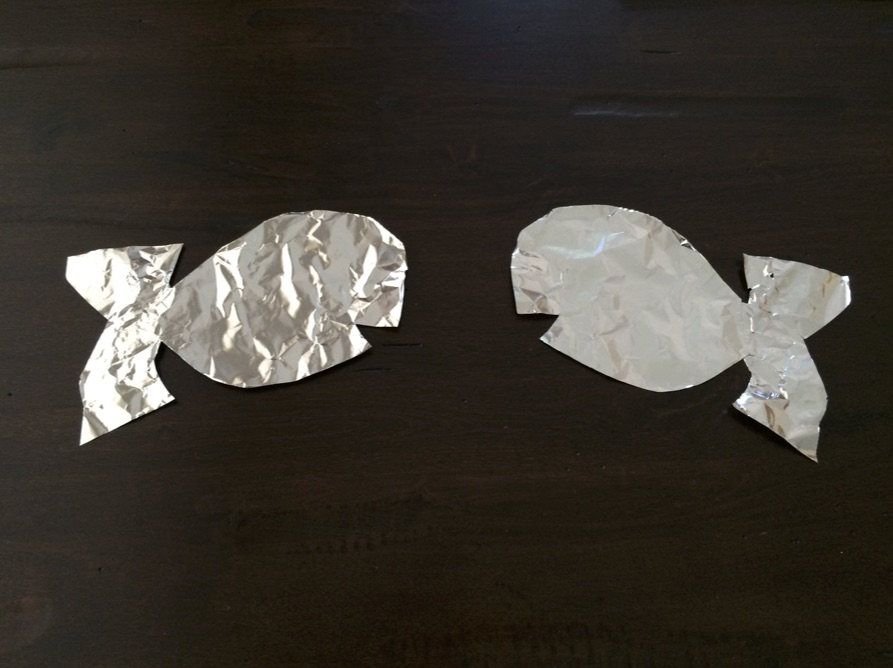
Or you could have your “word of the day” be “fish.” You could go to an aquarium or pet store to look at fish. You could also cut out aluminum foil fish for the bath and eat goldfish crackers for snack. You might go to the library to find books about fish. Repetition of the same concept, over and over again, helps a child to gain understanding of the concept.

Remember Your Behavioral Principles, Especially Prompting and Rewarding Desired Behavior
We want to encourage your child’s active participation in the games and activities we have talked about in this module and will describe in the next. Remember to use the principles on which this program is based. Whenever your child doesn’t play games with you, or imitate you, or watch what you’re doing, you should prompt him. You should help him as much as needed to keep him involved and playing along with you.
Prompting and immediately rewarding the desired behavior will make it more likely to occur next time.
If you’re playing a game where you are both supposed to clap, you can gently take his hands and help him to clap and then cheer him on for his good clapping, even if you had to help. If he isn’t looking at you or making eye contact with you, you can prompt attention and eye contact by putting yourself right in front of him. You could also hold up a favorite treat or toy near your face. When he does what you want, be sure to give him enthusiastic praise and whatever else he likes, like a tickle or a bounce on your lap. And when he needs help, always reinforce him for following your prompts nicely. He doesn’t have to do it all by himself. Show you him you are very happy with him just for playing with you.
Timing is Important
Remember that timing is a very important part of good teaching. Try hard to time things so that the high point of the fun happens just after your child has done something you are teaching. Remember, learning is an active process. In order for your child to learn, he has to do something, and the reward has to follow his action right away.
Good teaching requires that the adult pay close attention to the child’s responses. No matter how well you explain something or show him something, he will not be likely to learn the skill until you can get him to practice it himself. Watch him carefully. Then you will have lots of chances to reward the behavior you want to see happen more often.