

Selecting and Introducing New Foods
Before you begin working on getting your child to actually accept new foods, use your food diary to identify patterns in your child’s food preferences.
Here are some good rules to follow when picking new foods to introduce:
|
1. Choose Foods that are Like his Preferred Foods
Choose a couple of new foods to work on that are like the foods you know your child likes. For example, if your child likes vanilla pudding and vanilla ice cream, you can work on vanilla yogurt. This is because he probably likes things that are smooth, cool and sweet and have a vanilla flavor. Or, if he likes potato chips, pretzels, and cheese crackers, you could work on corn chips. This is because he probably likes salty, crunchy foods.
Even though your real goal is for your child to eat a variety of healthy, nutritious foods, it is often a good idea to begin with new foods that he might like. This is true even if they’re not healthier than things he already eats. This is because it will help in the long run if you can teach your child to think of trying new foods as a reward, or at least as something he can be ok with. Just giving him chances to be reinforced for being ok with new foods is a great place to start.
2. Fruit May Be Easier Than Vegetables To Begin With
If your child doesn’t eat fruits or vegetables, and you want to introduce fruits and vegetables, start with fruit. It’s just as healthy, and the child is more likely to accept it because fruit is sweet. Be sure to make that fruit look nice. For example, take a crunchy apple if he likes crunchy things or a very ripe apple if he like softer things. You can even cook it with a little sugar, or cinnamon-sugar if he likes that. Also, serve it at the temperature he likes his food at. In other words, make it as easy for both of you as possible.
3. Try Foods Your Child Used To Enjoy
Think about whether there are foods your child used to accept and now refuses. This is pretty common. Those foods might be good to try, since they will be familiar. Also, they probably won’t have the sensory qualities that really upset him.
4. Don’t Work on More Than Two or Three New Foods at Once
Be careful not to do too much. Remember, eating should be a good experience. Just pick two or three new foods that are very similar to foods that your child already likes. When you begin to introduce them, present only one at a time.
5. Introduce New Foods During Snack Times
It’s best to introduce new foods during snack times, but NOT during mealtimes. Once you have made mealtimes a happy and social time for your child and your family, it’s best not to risk bringing back a tense or unhappy atmosphere.
6. Have a Familiar and Trusted Person Introduce the New Foods
The most familiar and trusted person should introduce the new foods. If not a parent, this should be someone the child is very comfortable with, and someone who often feeds him.
7. Use VERY Small Pieces of New Foods
Start with really small pieces or amounts of food. We’re talking about really, really small, like one single pea, or one raisin, or a serving of mashed potato the size of a pea. If your child will accept even that tiny portion, that’s a great start.
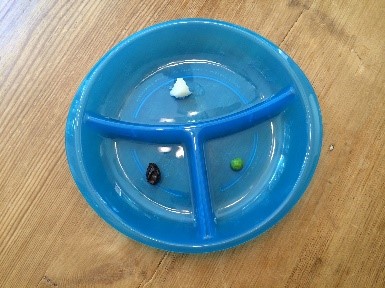
8. Combine tiny bits of New Foods with Preferred Foods
You can try to hide tiny bits of new foods (pureed or mashed up or cut into very tiny pieces) in foods that your child will eat. Foods that work well with this are foods like pasta with cheese or tomato sauce, rice, mashed potatoes, and pizza. By adding only very small bits of the new food at first, you will give your child a gentle introduction to the new flavor and textures without making him upset.
The key here is to use very small pieces of the new food when you’re starting and make sure they look like the preferred foods you serve them with. Here’s an example: Johnny loves well-cooked macaroni with cheese sauce but refuses all vegetables. His mom chose cauliflower because it was about the color of the macaroni and when it was well-cooked it was about the same texture. She started by just putting a few small pieces of this well-cooked cauliflower into the macaroni and cheese. Johnny didn’t notice. The flavor was hidden by the cheese sauce. There wasn’t a strong smell since there were only a few pieces.
Every week, she increased the number of pieces of cauliflower by just 1 or 2, until he was eating about half macaroni and half cauliflower.
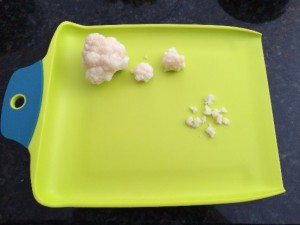
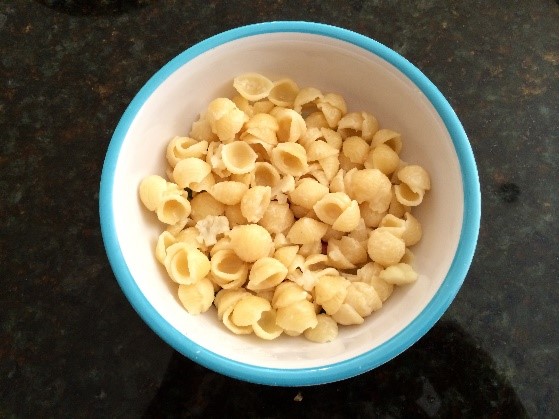
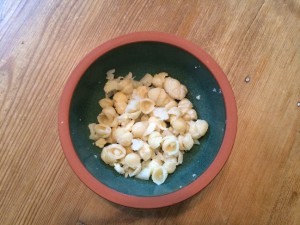
This would work with mashed potatoes also.
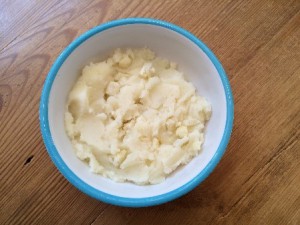
And if necessary, you can even begin by pureeing the cauliflower and mixing it in with the mashed potatoes, or mixing a little into the cheese sauce on the macaroni.
Blending Foods Together
Here’s another idea. Think about what your child might be ok with when it’s blended into a smoothie. If he’ll take a spoonful of a smoothie made from ice cream, you may be able to add small pieces of fresh or frozen fruit. Blend them up very well. You can do the same thing with yogurt. Think about what fruits your child might take when mixed in with yogurt. If he will eat yogurt with cherry, you may add a small amount of peach or strawberry puree. Try doing this for a few days, slowly adding just a bit more of the new fruit each day. If he becomes familiar with this new flavor and is ok with it, you can add tiny pieces of the same fruit that are not pureed. In this way, you can introduce your child to the flavors and textures of new fruits.
But here’s something to think about if your child is a very picky eater. Some children are very, very strict about the foods they will try. If they find bits of new or unfamiliar foods mixed in to a food that they do eat, it may make them reject that food. This might be even when there are no new foods mixed in. If your child has very few foods that he will accept, you might want to go very carefully with this idea of mixing new foods in. You do not want to risk his refusing to eat the foods that you rely on to make sure he gets adequate nutrition.
If your child has very few foods that he will accept, you might want to go very carefully with this idea of mixing new foods in.
Finally, you should remember some of the things we talked about in earlier modules. For example, let the child help make some food. Or make a game out of having a puppet feed him. And remember too that some children love anything sweet, but they may not like fruit that isn’t sweet enough to them. Even though a nutritionist might not like this, sprinkling a bit of sugar onto tiny pieces of a sour fruit, like an apple, may make it taste better to some children. Over time, you can add less sugar. And as we said before, some children will be more likely to try a new food if it is has a favorite sauce or topping such as ketchup, tomato sauce, cheese sauce, or grated cheese.