

PECS Phase 3: Discriminating Between Pictures of Two Preferred Items
How can I tell if my child has asked for what he really wanted?
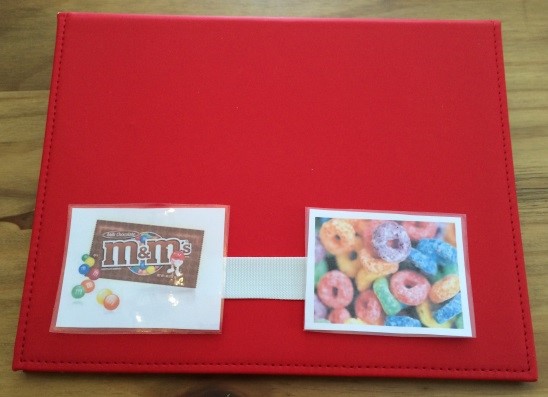
The tricky thing about offering your child choices between two or more preferred items is that it can be difficult to know whether or not your child requested the item he really wanted. For example, say that you have offered your child a choice between M&M’s and fruity cereal.
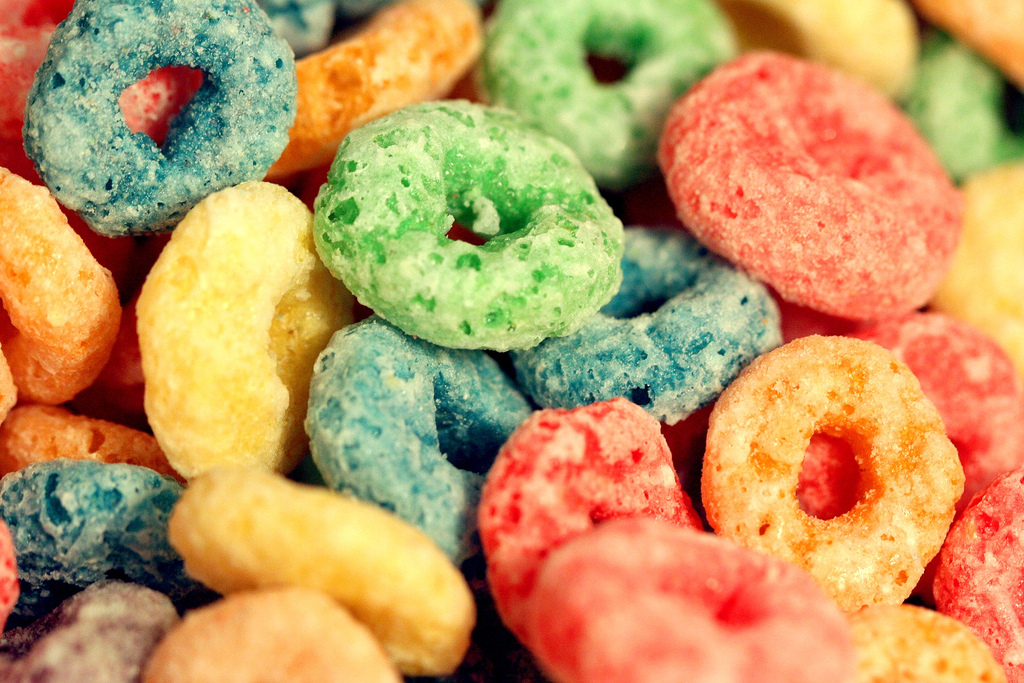

Let’s say that, of those two things, M&M’s are his very favorite; however, he also really likes the fruity cereal. If he chooses the picture of the cereal by accident and you hand him a piece of the cereal, he may be happy enough with the cereal and eat it right away, even though what he really wanted was an M&M. What you can do to figure out if your child is choosing the item he really wants in this case is to run a little test.
Place both of the items you are offering on a little plate or tray. After your child chooses a picture and hands it to you, offer him the tray with both of the choices and see which one he chooses. See if he chooses what he requested. Watch in the following clip how the child chooses the picture of the M&M’s over the picture of the Fruit Loops cereal. He then reaches for an M&M when handed a plate with both. This shows that he most likely selected the picture of the treat he wanted most.
“Teach the Reach”
If your child reaches for the item that he requested, that’s a good sign that he is paying attention to the pictures. It also means that he is learning to discriminate between them. But if you do this test several times a day and your child does not usually reach for the item he requested with PECS, you need to prompt him. He’ll need a prompt to ha nd you the picture of the item you know that he wants.
For example, say your child has handed you a picture of cereal but he reaches for the candy. In this case, you would gently block his hand from getting the candy. Then quickly offer him the choice of the two pictures again. Prompt him to hand you the picture of the candy. As soon as he places the picture of the candy in your hand, say the word “candy” and hand him a piece of the candy. The designers of the PECS program refer to this procedure as “Teach the Reach” because what he reaches for is probably what he wants most. And so you prompt him to ask you for that item.
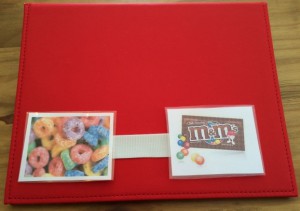
After your child has reached for the item that he has requested, then it is a good idea to change the positions of the pictures.
Or, say you have offered your child a choice between pieces of chocolate chip and Oreo cookies.
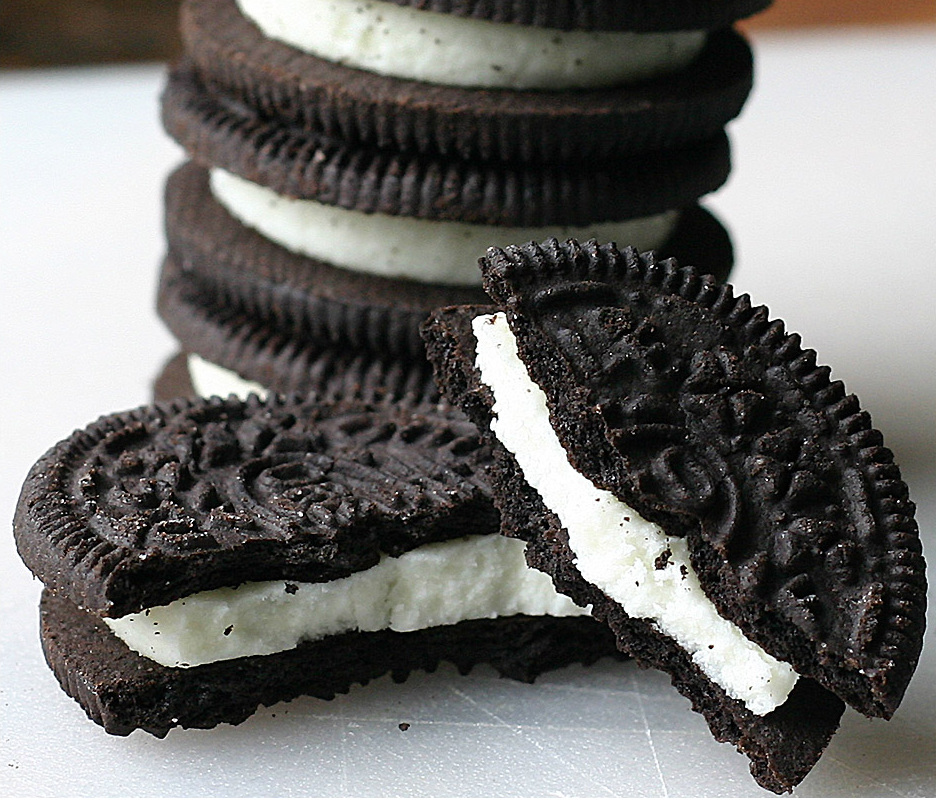

He hands you the picture of the chocolate chip cookie; however, when you offer the plate with both types of cookie pieces and say, “Here” or “Go ahead and take it,” he reaches immediately for the Oreo cookie. At that point, you can gently pull the plate back out of your child’s reach and quickly set up for another trial by replacing the picture of the chocolate chip cookie. Then, as soon as you present the choice again, prompt your child to select the picture of the Oreo cookie. Since that is what he reached for, it is most likely what he wants most at that moment.
Hopefully, over time, when you test to see if your child is choosing what he has asked you for, he will reach for the item he has requested more and more often. If your child continues to have difficulty discriminating between pictures, don’t worry. Earlier, in module 9, we talked about matching and discrimination training.
However, if your child does well learning to discriminate between two pictures of preferred items, you can begin to add more preferred pictures to the front cover of your child’s PECS binder during your training sessions. You can leave a few pictures on the cover of your child’s PECS binder in between training sessions too. If he spontaneously goes to the binder and hands you a picture in between training sessions, that is just what you want to see and you should immediately reward him with whatever he has asked you for.
But here’s something important to consider: when your child is first learning to make requests using PECS you should try to show him only things you actually have. Over time, he will learn to use his pictures to ask you for many different things. But you will need to refuse him some of these things. This is because from time to time he will probably ask you for things that you either don’t have or things that you don’t want him to have at that moment. For example, if he asks you for a cookie just before dinner, you will probably want to be sure he eats a healthy meal before eating a cookie. In Module 6 we showed you how to teach your child to wait for things. We also showed you how to use pictures to communicate to him the concept of “first-then” as in “first dinner, then cookie”. But when you are first teaching your child to make requests using PECS, you should try not to refuse him the things he asks you for.
Using Smaller Pictures
We have been talking about using mostly photographs or other pictures that are about two-inches square. As you add more and more pictures of preferred items onto the front cover of your child’s PECS binder, you will fill it up! When you are getting close to that point, you should begin to experiment with using smaller pictures. If you have used a computer to make your pictures, this will be easier. You can go back to the images on your computer and print out smaller versions of the same pictures. If your child can learn to use pictures of only about one-inch square, you will be able to fit a lot more pictures on the front cover at one time.
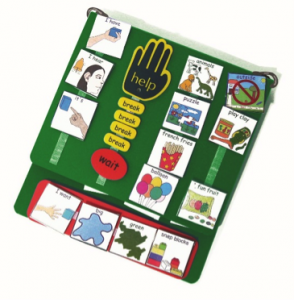
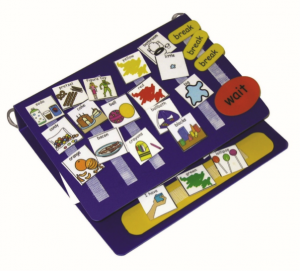
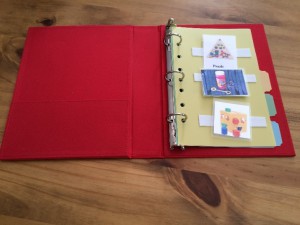
As your child learns to request a greater variety of different things, you can store pictures that are not in use on plastic sheet dividers inside your child’s PECS binder.
Organizing the PECS Binder for Easy & Efficient Use
It’s a good idea to organize your pictures in categories so that you, and later your child, will know where to look for them. For example, you might have a separate page for special food treats like cookies, candy, chips or pretzels. You may also have a page for breakfast foods, a page for lunch and dinner foods, a page for toys. You should also have a page for your child’s favorite activities such as going on a swing or slide, going for a walk, or blowing bubbles. If you like, you can name the tabs on sheet dividers to show which pictures will be on which pages.
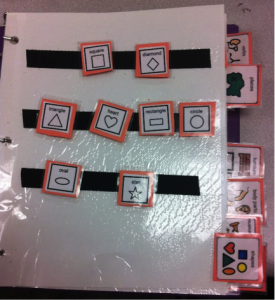
Remember to switch the pictures that you put on the front of your child’s PECS binder to fit the activity you are planning next. For example, say you are getting ready to bring your child to play in the park. In that case, you might put pictures of the swing, the slide, sandbox toys, and bubbles on the front of his PECS binder. Then be sure to bring his binder with you to the park. If you are getting ready for dinner, you can switch to pictures of the foods and drinks that your child can have during that meal. Remember, you want to give your child as many chances as you can to practice using PECS in the natural environment during all kinds of daily activities.
You can learn more about this, as well as about how to teach many more additional skills by contacting the PECS program at pecsusa.com. We also encourage you to read the book “A Picture’s Worth: PECS and Other Visual Communication Strategies in Autism, Second Edition” written by the founders of the PECS program.
Bondy, A. and Frost, L. (2011). A Picture’s Worth: PECS and Other Visual Communication Strategies in Autism, Second Edition. Bethesda, MD: Woodbine House.
Now we are going to ask you to answer some questions about what you have learned. Some of the questions will have choices, some will be true or false questions, and some will be fill-in-the-blank questions. A good way to work on these questions is to read the question, think about the answer, then make your best guess. There will be 10 questions. Even if you answer all of the questions correctly, we recommend that you go back and review the discussion of each phase of PECS training before beginning to teach that phase to your child.