

Expressive Labels-First Words
Once your child can imitate sounds and words and has learned to understand a few words in three or four categories (such as foods, articles of clothing, animals, and vehicles), you are ready to start teaching her to say the words you taught her to understand. When you began teaching your child to understand words, we suggested that you choose words that were useful for your child. We suggested that you include things from common categories and also common household objects, such as spoon, fork, plate, cup and bowl. Here is the sample list of words to teach that we showed you in the section on teaching Receptive Language.
| Food/Drink | Animals | Clothing | Vehicles | Furniture | Miscellaneous |
| Apple | Dog | Sock | Car | Table | Cup |
| Cheerios | Cat | Shirt | Truck | Chair | Spoon |
| Cookie | Cow | Shoe(s) | Airplane | Couch | Puzzle |
| Bread | Horse | Pants | Train | Bed | Scissors |
| Yogurt | Bird | Shorts | Boat | Dresser | Toothbrush |
| Hamburger | Elephant | Dress | Bus | Desk | Pencil |
| Banana | Giraffe | Coat | Helicopter | Stool | Crayon |
| Cheese | Pig | Boots | Van | Bench | Paper |
| Milk | Sheep | Gloves | Motorcycle | Bookshelf | Hairbrush |
| Juice | Rabbit | Hat | Tractor | Cabinet | Comb |
Begin With Words That Will Be Meaningful for Your Child
With the Receptive Labels teaching program, we suggested that you begin with words for things your child is likely to use or see on a daily basis. That’s a good idea for teaching your child to say words too. We suggest that you choose words from a few categories, starting with words that are most familiar for your child. For example, if your child likes apples and has a pet cat and spends time riding in a car on most days, then “apple,” “cat,” and “car” would be a good set of words to start with. If you kept a list of the words your child has learned to understand, you should choose the most important words from that list. Start with three of these words. If you have not already made a list of the words your child has learned to understand, you can do that now. Then you can choose words from that list as your first words to teach in the Expressive Labels teaching program. Be sure to leave out the words for colors, shapes, people’s names, and action words, because we will show you how to teach those words separately, just like we did when we talked about teaching receptive language.
Expressive Labels Teaching Program
You can use the same pictures that you used to teach your child receptive language skills. Select three pictures to start with and hold one of them up in front of your child. You can ask, “What is it?” or you can just hold up the picture and wait for your child to label it. Either way, use verbal imitation to prompt your child to label the picture. You can demonstrate (model) the whole word or start with just the first sound. In the next video clip, the teacher starts off by saying (modeling) the whole word and then says less and less until she is using only the first sound of the word.
In the next clip, the teacher is working on the Expressive Labels teaching program. She is using pictures that the child is labeling, mostly by himself, without prompts. See that she starts by asking the question, “What is it?” on the first trial. She then continues with the teaching program, by just holding up the pictures one at a time. Then she waits for him to label them.
Be sure to practice this two ways. Sometimes ask, “What is this?” while holding up the picture. At other times, just hold up the picture and look at the child with an expectant look. This is because you want your child to learn to answer the question, “What is this?” But you also want to encourage your child to talk about things without being asked a question. Like with asking for things, we want your child to initiate other kinds of communication too. In this case, we want her to say the names of objects. So, for example, if you hold up a picture of an airplane and your child says “airplane” without being asked, it may be more likely that the next time she sees a real airplane flying overhead, she might show it to you. When a child shows you things by pointing to them while shifting her gaze between you and the object of interest, this is called joint attention. This is a very important social skill. Then we want your child to be able to add to this by naming the object of interest. This is called “commenting” because the child is making a comment about the object of interest.
An example of how to do this:
|
Present your pictures, one at a time, in random order. Prompt as you need to, using verbal imitation (where you say the word or the first sound), and reinforce both prompted and independent responses.
Let’s pretend your first three pictures are cup, shoe and cookie.
Here are some examples of orders of trials that would be mixed-up or “random” since they don’t follow a specific pattern. These might work well for you and your child.

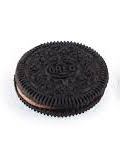
Here are some examples of orders of trials that would not be predictable as they follow no specific pattern, and might work well for you and your child.
| Sample Order 1 | Sample Order 2 | Sample Order 3 |
| Shoe | Cup | Shoe |
| Cookie | Cup | Cup |
| Shoe | Cookie | Cookie |
| Cup | Cookie | Cup |
| Cup | Shoe | Shoe |
| Cookie | Cookie | Shoe |
| Cup | Cup | Cookie |
| Shoe | Shoe | Cup |
| Cookie | Shoe | Cup |
Move From A Full Model to A Partial Model
There are two ways you can begin to fade your prompts. One is to delay your prompt for a few seconds. You may notice that if you delay your prompt just a little, your child may begin to label one or more of the three items before you prompt her. The other way is to give only a partial model by saying only the first sound of a word. So, for example, if you would like to fade your prompt on the word “shoe,” try giving only the “sh” sound. Some children will then repeat only the part of the word that you have shown them. But others will pick up on this partial prompt and respond by saying the whole word. You should fade out your prompts on any words that she begins to say on her own. And of course, remember to reinforce her enthusiastically for any correct responses she makes independently.
Test to See If There Are Some Words Your Child Already Knows How to Say
As we’ve said before, it’s also a good idea to test and see if your child is able to name new items on the very first try without any prompts at all. If you present a new item, mixed in with ones she has already learned to name and she responds with the right word the first 3 times you present it with no help, great! If she doesn’t answer, or answers with the wrong word, just pause briefly (for two or three seconds) and then start another trial, but this time, prompt her right away by saying the word for her. Then reward her enthusiastically for following your prompt.
Adding New Words
When your child correctly says the names of the first three pictures at least 8 times out of every 10 times you present them, without any prompts at all, it’s time to add a new item. Just show her the new picture, mixed in with the ones she has learned. Present them in random order. It’s a good idea to present the new word about 4 times out of every 10 trials. As your child learns to say new words, add new items from the list of mastered Receptive Labels.
Remember to Keep Track of the New Words Your Child Is Learning
It’s a good idea to keep a list of all of the words that your child has learned in the Expressive Labels teaching program. Remember, once your child has learned a new word, you will present it mixed in with the other words she has learned as you teach the next new word. That way, your child will have plenty of chances to practice all of the words she has learned. At the same time, she will get a lot of practice on the new word. Once your child has learned a new word, try to have her use it in the natural environment (during meals, at the playground, in the grocery store, etc.).
If your child makes mistakes on previously learned words, just add them back in as new words. Give your child plenty of chances to practice them and give her as much help as she needs, fading your prompts over time. And, as each new word is learned, remember to add it to the list of items your child can label.
A Good Practice Idea!
Here’s something else you can do to make sure your child is getting enough practice with her new words. When your child learns at least 10 words, lay out the pictures of items she can name on the table in front of her. Put five to ten pictures in a row depending upon the size of the table. Show your child how to go right down the line, naming all of the pictures. Show your child to work from left to right and/or from top to bottom. Encourage her to go as quickly as she can. Try to make time to run through all of your child’s pictures every day.
Use Plenty of Different Pictures for Each Word
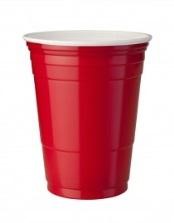
And here’s another important point. When your child learns a new word using a single picture or object, you should be sure to use other examples to work on that same word. So, just like with Receptive Labels, if you teach the word “cup” using a picture like this:
Make sure that she can label “Cup” when you show her different pictures of cups. Here is a set of pictures of different types of cups.
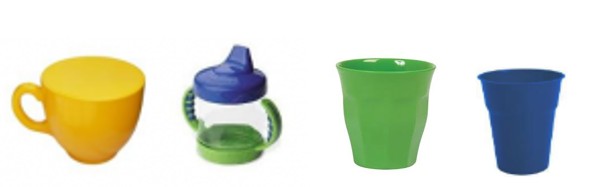
Don’t be surprised, or upset, if your child doesn’t label the new pictures correctly at first. This is quite common. Just show her new examples of the items she has learned to name, until she’s able to name the new examples correctly, the very first time you present them.