

Expressive Categories
Next we are going to talk about how to teach your child to label the categories to which items belong. For this teaching program, you can use the same pictures you have been using for all of the Receptive and Expressive teaching programs.
What Your Child Should Know Before Starting this Teaching Program
You should not begin the Expressive Categories teaching program until your child has mastered at least three categories in the Receptive Categories teaching program. In other words, she should be able to point to items from at least three different categories when you say the names of those categories. For example, if you have a picture of a cookie, a dog, and a shirt on the table, your child should be able to pick out the right picture when you ask her which one is a food, an animal or a kind of clothing. She should be able to do this without any help. She should also have mastered at least 5 expressive labels, from each of those three categories.
And here’s another important point: you should never use an item that your child cannot name when teaching the label for the category to which that item belongs. For example, if your child is not yet able to say “soup” when you show her a bowl of soup or a picture of a bowl of soup, you should not use soup as an example of food when teaching Expressive Categories. Sometimes, teaching a child to label the category for a word she cannot yet say results in the child confusing the category label with the label for the item itself. In the case of soup, she may mistakenly learn that the word for that bowl of warm broth that she eats with a spoon, is “food.”
You should never use an item that your child cannot name when teaching the label for the category to which that item belongs.
Here is a list of nine common categories that we showed you when discussing the Receptive Categories teaching program.
| Food (Including Drinks) | Animals | Clothing (Including footwear) |
| Furniture | Vehicles | Body Parts |
| Colors | Shapes | Appliances |
Begin with a set of 5 to 7 items from each of three categories. Make sure that your child can point to all of these items when you label them and that she can also label (say the words) all of these items herself. Here is a sample starter set of items in three categories.
| Food | Animals | Clothing |
| Apple | Dog | Sock |
| Cheerios | Cat | Shirt |
| Cookie | Cow | Shoe (s) |
| Bread | Horse | Pants |
| Yogurt | Bird | Shorts |
| Milk | Elephant | Dress |
| Banana | Giraffe | Coat |
Expressive Categories Teaching Program
To start, hold up a picture from one of the categories in front of your child. First ask her to name the picture by asking her, “What is this?” For example, hold up a picture of a dog and ask, “What is this?” Your child should respond by saying “dog”. Praise her right away and then ask, “What is a dog?” Then prompt her to say “animal.”
When you praise your child, be sure to use both the item name and the category name, This is especially important when you are just starting this program. For example, you might say, “Great job! A dog is an animal.” Or “Right! A cookie is food!” And be sure to reinforce a few trials in each group of 10 with other treats too if you think this will help your child to stay interested and to keep trying. For example, after every few correct responses, you could offer a small toy to play with, a tickle, a small treat, or a sip of a favorite drink. Any of these could work well. That’s especially true if you save these extra treats for independent responses.
|
Fade your prompts over time, until your child can name any item and its category from any of the first three categories. She should be able to do this without any help for at least 8 out of every 10 trials. As usual, for the first three categories, track your child’s progress on the set of three categories. Add a fourth category only after she has learned the first three categories well. You will know she is ready to add a fourth category when she is correct in at least 8 out of every 10 trials.
Adding New Categories
When you add the fourth category, present the pictures, mixed in with pictures from the three categories your child has learned to label. Present them in random order. For example, if your child has learned food, animals, and clothing, then “vehicles” could be the new category. Present trials of “vehicles” mixed in with trials of food, animals and clothing.
Remember to present pictures of various vehicles (for example a car, train, boat and plane) at least 4 times out of every 10 trials. Leave the rest of the trials to practice items from categories your child has already learned. These could be, for example, food, animals, and clothing. And remember, you will probably need to prompt the new category name. You only need to keep track of how well your child is doing with the new category. In this case, the new category is “vehicles” and she should already know the others.
Prompt, Reinforce and Practice using Full Sentences
Have you heard your child say more than one word at a time? Does she ask for things using more than one word? For example, “I want juice,” or “Juice please?” If so, then you can try prompting her to respond using a full sentence. For example, you could prompt her to say, “Dog is animal.” Or “A dog is an animal.”
Continue with this program, adding one new category at a time. Your child should be able to name the items and the category to which they belong for all of the categories she learns. You should teach at least the most common categories. These are food, clothing, animals, vehicles, furniture, and body parts.
You can continue to teach additional category names if you wish. Pick categories that are most familiar for your child. You will need to make more pictures as you add new categories, like musical instruments and appliances. But you won’t need to make new pictures for Color and Shapes. As you add new categories, be careful to practice all of the categories that she’s already learned. If your child is using a sentence to tell you which category an item belongs to, try laying out about 5 to 10 cards in a line across the table. Ask your child to tell you about the pictures as quickly as she can.
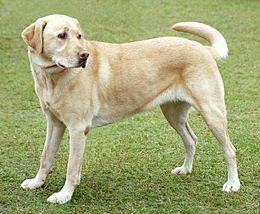 Dog is an animal Dog is an animal |
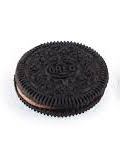 Cookie is food Cookie is food |
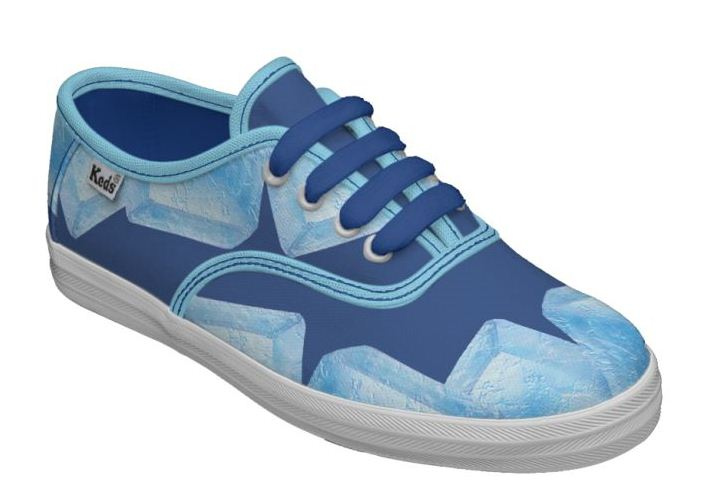 Shoe is clothing Shoe is clothing |
 Car is a vehicle Car is a vehicle |
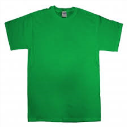
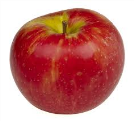
Shirt is clothing. Apple is food.
OR
 Airplane is vehicle Airplane is vehicle |
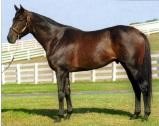 Horse is an animal Horse is an animal |
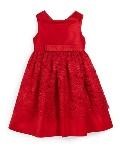 Dress is clothing Dress is clothing |
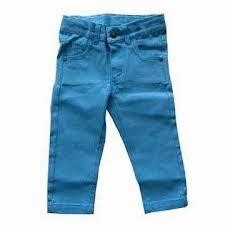 Pants are clothing Pants are clothing |
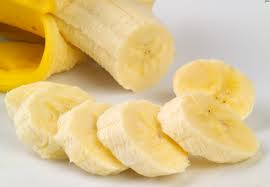

Banana is food. Train is a vehicle.
Prompt her to point to each picture in turn, saying, for example, “Airplane is a vehicle. Horse is an animal. Dress is clothing. Etc.” Your child can practice with a lot of his category pictures in a very short period of time this way. Just remember to mix up the order of the pictures so that he’ll never know which one is coming next.