

Encourage Play
The more time a child spends doing things with the family, the less time there will be for problem behavior. Activities with the family include playing with toys, doing learning sessions, eating meals with the family and doing daily routines.
Of course, there will be times when you will have other demands on your time. Nobody can pay attention to their children all of the time! During these times, it’s a good thing if your child knows how to play with toys like puzzles, shape sorters, stringing beads and books and can entertain himself with these kinds of toys that require active engagement.
If a child is reinforced for doing these things that are good for him, he will have less time for problem behavior. These activities will also prevent boredom. The more children are reinforced for doing as you ask, the less likely they are to have tantrums or be focused too much on their own thoughts.
Some Children Will Need Help Learning to Play
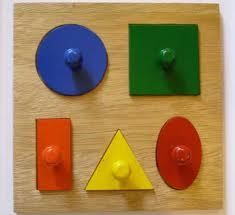
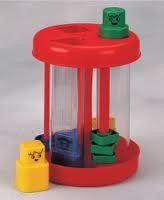
Some children enjoy playing with their toys and figure out how their toys work without much help. Other children will need your help learning how to play even with simple toys. These could be toys like puzzles, stacking rings, shape sorters or pop-up toys. Some children will need a little help to play nicely with their toys for more than a minute or two.
Earlier, we discussed how to teach your child to do puzzles by prompting them to put in one piece at a time and reinforcing them for doing so. We also talked about starting with all but one or two of the pieces of a puzzle, or similar toy, already put in. Then the child only has to put in the last piece or two. For example, you can start teaching your child to finish a puzzle with all but one of the pieces already in. Then, slowly increase the number of pieces your child needs to put in to complete the puzzle. The same method can be used to teach your child to play with any toys that have to be put together.
Module 14 talks about teaching children to do pretend play. But if your child does not yet do any pretend play, that’s OK. You can begin by helping and reinforcing your child to play with simpler toys. These could be toys that can be taken apart and put back together, toys that have pieces to put in or take out of a container, or pieces that stack.
Learning to Follow A Toy Play Schedule
It’s best to wait until your child has learned how to complete a few toys that have to be put together, like puzzles, shape sorters, Mr. Potato Head or stacking rings, all by himself. Then use a short picture schedule to show him that you would like him to play with two or three toys before doing something else.
After they have learned to play with these kinds of toys, many children find them calming. For this reason, it’s a great idea to help children play with these toys that are calming several times a day. If there’s a puzzle or another put-together kind of toy that your child really likes, start with that one. That should help the child keep going until he finishes the task. It’s always a good idea to use activities or toys the child likes. After all, we want play to be an activity the child enjoys.
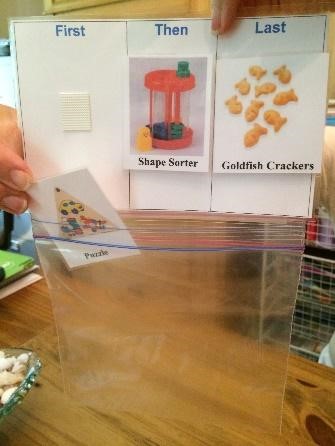
Here’s a very simple toy play schedule. By changing the toys and mixing up the order, your child will have more chances to learn to be flexible in how he plays with his toys. For example, this picture schedule shows that he should first play with his vehicle puzzle, then his shape sorter and then he will get some goldfish crackers.
The next time you help your child to play with these two toys, you should change the order of the toys.. You can even change the treat he gets when he is finished. Then you can say “First shape sorter, then puzzle, then cereal!” When you mix up the order of the toys, your child will learn to follow the schedule rather than just to play with certain toys in a specific order.
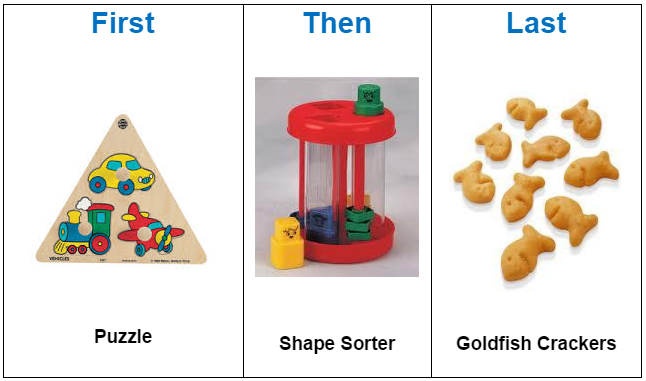
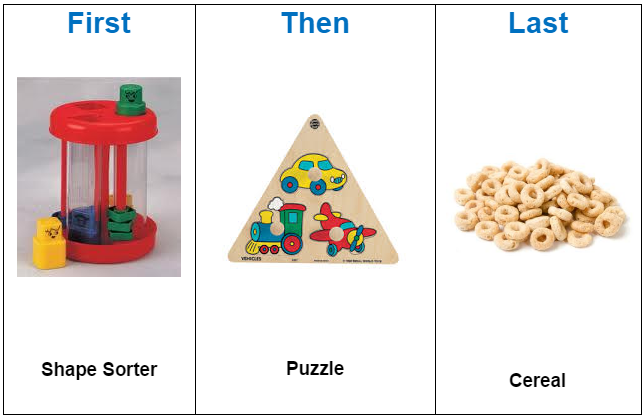
In this example, we used the word “last.” For example, you could have pictures for first, next and last. But if you think it’s better for your child to just use first and then, that’s fine. You can say first puzzle then shape sorter then crackers. Or you could say first shape sorter, then puzzle, then cereal.
One way to make toy play picture schedules easy to follow and easy to change around, is to just make one toy play picture schedule board. You can then Velcro the pictures onto the board in any order you like. You can even attach a small envelope or bag to the bottom of the schedule board. Then, each time your child completes a toy, you can teach him to take the picture from the board that matches that toy and put the picture in the “all done” bag.
To Encourage Independent Play, Prompt Quietly and From Behind
When you teach your child to follow a toy play schedule, it is best to prompt your child from behind. It’s also best to say as little as possible. Instead, just guide your child using a gentle, physical prompt as needed. This is because it is a little easier to fade physical prompts than it is to fade verbal prompts.
For example, if you are working at a small table, put the picture schedule board on the table. Then, prompt your child, using a hand-over-hand prompt, to point to the picture of the puzzle. As soon as you are sure he has looked at the picture, prompt him by guiding him from behind, to get the puzzle and bring it back to the small table. Ideally, your child’s learning materials should be stored in a familiar location, so that your child will learn with practice where to find them on his own.
Once he has the puzzle, offer him as much physical help as he needs to put it together, not saying much. He shouldn’t need much help, since you will be adding only those toys that your child has already learned to complete all by himself. Since the pieces will likely all be in place when he gets it from the shelf, prompt him, if necessary, to remove the pieces from the puzzle board and then put them back in again. Again, just prompt using gentle physical guidance. Try not to talk much. Once he has finished, prompt him to place the puzzle back onto its place on the shelf, ready for the next time he will play with it. Then return to the picture schedule board, and prompt him to remove the picture of the puzzle. Then, point to the next picture, in this case a shape sorter, and repeat the process with the shape sorter. When he finishes with the shape sorter it will be time for his special reward, in this case, crackers.
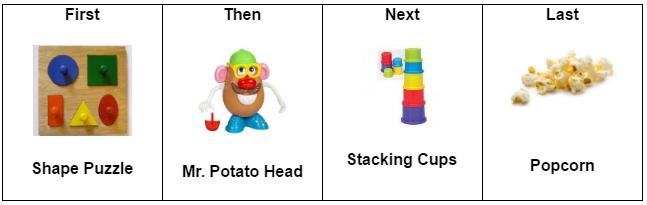
Here’s another example of a play schedule.
Each Activity Can Be Broken Down Into Three Steps
One way to think about a picture activity schedule is to understand that each task has three simple steps. They are as follows:
Step #1: The child must point to the first picture in the schedule. He must then get the materials necessary to complete the task shown in the picture.
Step #2: The child must complete the task.
Step #3: The child must put the materials back where they belong. Then he should remove the picture of the task that has been completed and begin again with the next picture.
When the child gets to the last picture, the picture of the reward, he can remove the picture from the schedule board and use it to request the reinforcer by handing it to you.
Teach It Where Your Child Will Use It
To make it easier for your child, teach him to use the toy play schedule in the same place where he will use it once he has learned it well. For example, say the goal is for the child to complete the schedule in the kitchen when Mom or Dad are making dinner. In that case, the toys that will be used in the toy play schedule should be kept in the kitchen. You can keep them on a small book case, on a shelf or in a bin. And if the child will be using the picture schedule in the kitchen, teach him to use it there from the beginning.
Of course, you can also set up a few toys for your child in his special learning place and teach him to follow a toy play schedule there. Once he is good at it, and can do it all by himself, you can teach him to follow the same type of schedule in other places.
In the following clip, the teacher is showing a little boy how to follow a simple picture schedule. He has already gathered the toys shown in the schedule and has placed them on the table in his learning space. She talks very little, relying mostly on physical prompts and point prompts. When she does talk, she does so mostly to encourage and reinforce him. He catches on very quickly.
An Alternative Approach
For children who have difficulty following a picture schedule, there is another option. Put toys that your child knows how to play with in the drawers of a small portable storage unit.
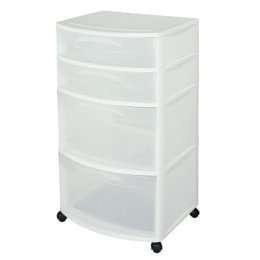
Then you can teach the child to work from top to bottom, completing the toys, one drawer at a time. In the following clip, notice how the teacher prompts the girl from behind. She watches the child very closely so that she can interrupt any repetitive behavior. This helps her to move from top to bottom, keeping her on task. When the girl gets to the last drawer, there is a picture of “All done” that she can use to ask for the reinforcer.
Teaching children to spend their time doing things that are good for their development, and giving them a lot of reinforcement for doing these things, goes a very long way toward preventing problem behavior. Teaching children to take turns and share treats and toys is a great way to prevent problem behaviors like grabbing toys away from others or having tantrums when another child plays with a favorite toy.