

Eat Two Types Of Food For A Reinforcer
If you get your child used to the two new foods you picked but he still doesn’t eat any of the new foods, go on to the next step. At this next step you will have short learning sessions. These are to work more on encouraging your child to try new foods, rather than only accepting the new foods on his plate.
These learning sessions should be done in between meals, preferably when the child is a little bit hungry.
These learning sessions should be done in between meals, preferably when the child is a little bit hungry. This might be at the time of his usual mid-morning or mid-afternoon snack. If he’s not at all hungry, like just after lunch, this is not going to work, At that time, he won’t want to eat anything. So, it’s best to put your learning sessions in between healthy meals and before any snacks. For example, give your child a small, but healthy breakfast, then try a “new food learning session” two hours later when he starts to get hungry again.
Choosing A Reward
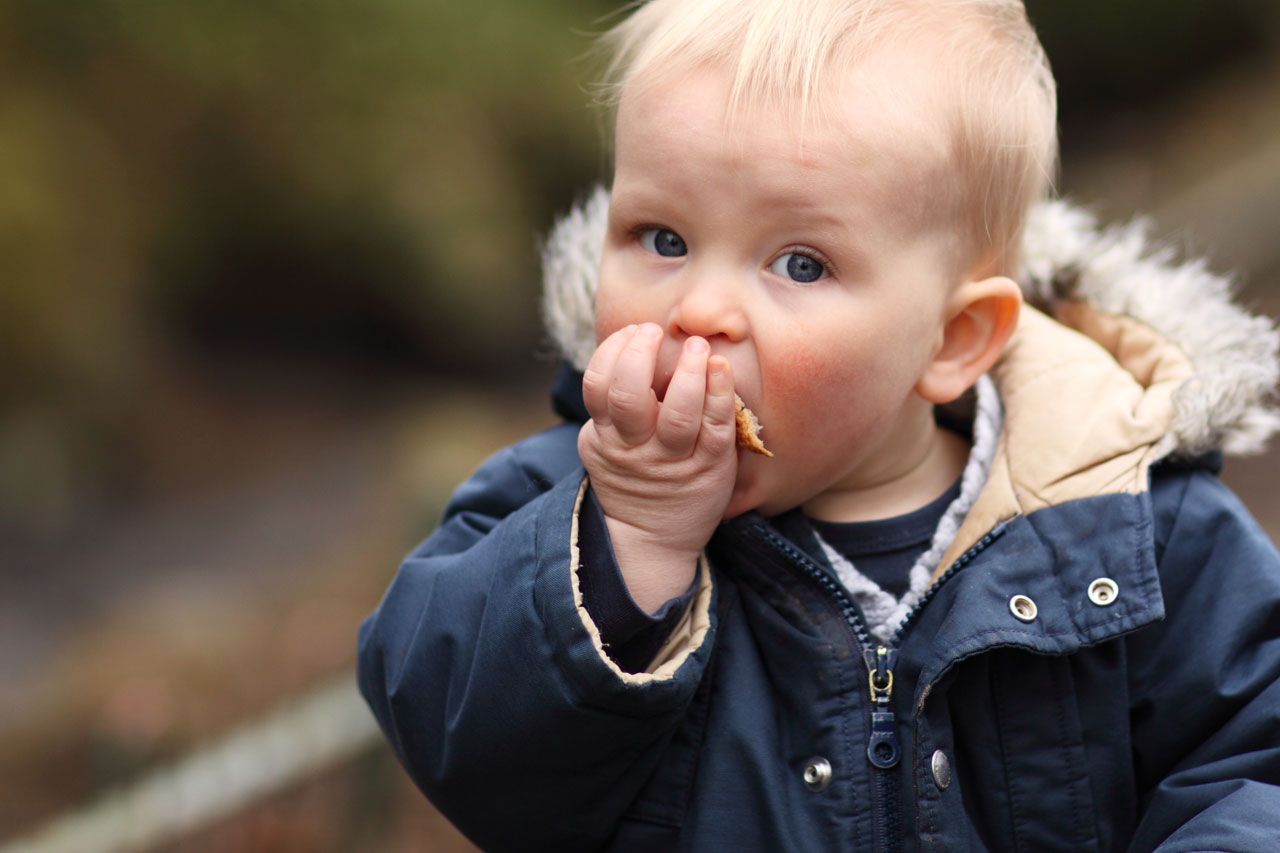
The first thing you need to do is to pick a powerful reward that you know your child really likes. For example, this could be going outside to blow bubbles, a very favorite toy that he doesn’t get to play with often, watching a favorite movie or TV show, or anything else he really likes. It could also be a favorite food treat, like a piece of candy. This will work best if it’s something special that he doesn’t get very often.
Remember, for many children, trying new foods is a very difficult thing to do.
In fact, for this part of the program, and for the next one, it’s important that your child can’t get this reward at other times. In other words, it should be something that he can have only during food learning sessions, at least for now. If the child can have the reward at other times, it won’t work as well for learning to accept new foods.
Remember, for many children, trying new foods is a very difficult thing to do. So, in order for the reward to reinforce trying new foods, it has to be very special. The more special and rare the treat, the more likely he will be to make an effort to get it.
If you pick a food for your high-powered reward, make sure it’s not something your child needs for his nutrition. For example, if his main source of protein is milk and he likes it very much, we wouldn’t want you to limit his milk and use it as a reinforcer, because he really needs it. Never use water, either. Children should always be able to have water when they’re thirsty.
Getting Started
Set up this phase of the program up just as you did during the exposure phase, where you were just trying to get him to tolerate a strange food on his plate, with only one small difference. This time, you’re going to offer your child his special reward for eating at least one bite of at least two of the foods on his plate. You will still place 2 preferred foods and 1 new or non-preferred food on the plate. Make sure that all of these foods are in very small amounts– like one grape, one pea, one small piece of apple, one small bite of chicken, or one corn chip. Use even smaller portions than when you were just working on building tolerance to new foods on the plate. Always present only one of the new foods during a single learning session. And remember the rules we gave you before about how best to select new foods. Choose foods that are similar in some way to foods that your child likes.
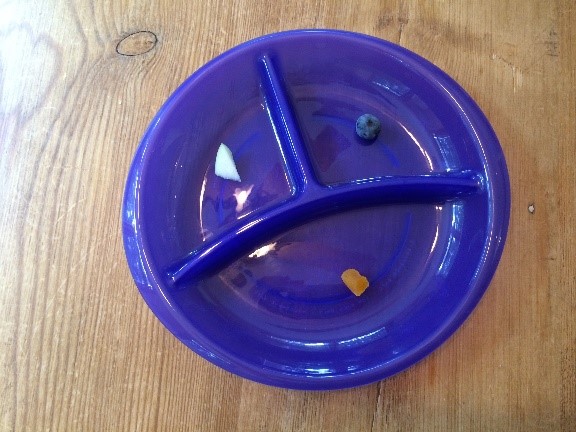
For example, if your child likes raisins, you might try to introduce dried apricots because they are sweet like raisins and similar in texture. Here’s an example of a plate made for a child who likes raisins, apples, and blueberries but has not yet tried dried apricots. He has on his plate, a blueberry, a small piece of apple, and a very small piece of dried apricot.
Earning the Special Treat
For this phase of the program, the child must eat two things in order to get the special treat. Let him see the special treat but keep it out of reach. Remember, since two of the foods on his plate are preferred, it really shouldn’t be very difficult at this point for him to earn his reward. In fact, the whole point of this phase is just to establish a pattern where your child eats at least two of the three tiny pieces of food and earns an immediate reward. We want this to become an easy, automatic routine for him. Give him lots of enthusiastic praise along the way. Say things like, “Great! You ate one! Just one more to go and you get your special treat!” Or “Wow! You ate two things! Now you get the bubbles!” And, it really should be “NOW.” Your child should get the reward immediately after he eats the second food on his plate. Choose only those things you can provide immediately after he eats his second bite of food.
Give lots of enthusiastic praise along the way!
It might be helpful to use a visual aid to make this idea clear to your child. Here is an example. If you plan to use bubbles as a reward, it would be great to take a picture of your child happily popping bubbles and use this picture to give him a very clear idea of exactly what’s coming! For example, let’s say his three foods that day are a raisin, a blueberry and a small piece of apple, with the new food being the apple.
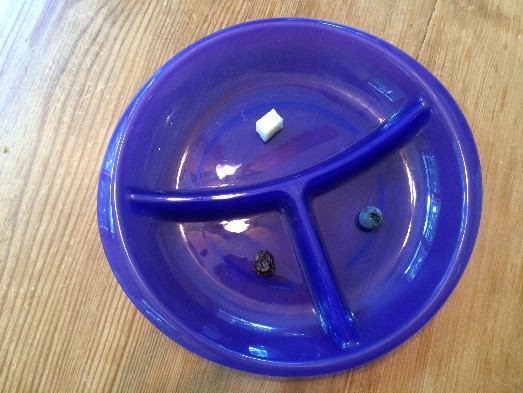
If he chooses to eat the blueberry and the apple, give him lots of praise, just as you would if he chose the two familiar foods, and immediately give him his special treat.
Troubleshooting
If after a couple of weeks of doing this new food program at snack times, your child does not try either of the two new foods you have been offering, try adding a couple more new foods into the rotation to see if he’ll like one of those. Just remember to always include only one new food and two foods that are familiar and that he likes and eats often. Keep going for at least another two weeks, with no more than four new foods, and the rest familiar foods. Always present only one of the new foods during a single learning session.
Remember, when trying to increase your child’s food repertoire, it’s really important to use the least amount of pressure possible.
Here’s something important to remember. If there are two preferred foods and one new food on the plate, and the child needs only try two foods to get his reinforcer, there is really no pressure for him to try the new food. If your child begins to try new foods, then there’s no need to move on the next phase– you’ve already gotten him to try new foods! Remember, when trying to increase the foods that your child will eat, use the least amount of pressure possible. You don’t want to turn this into a battle for control. So, if your child is beginning to try tiny bits of new foods at this phase, simply stay there and very slowly introduce new foods. You should also very slowly increase the portions of the newly accepted foods during actual snack or mealtimes. But still keep the portions in your special food learning sessions very small, as you introduce new foods there.
The Next Step: Eat A New Food For A Reinforcer
If after a month or more, your child is routinely eating two foods for a special treat but still never choosing any of the new foods you have selected, it is time to move on to the next phase. This phase is almost exactly like the one we just described, except that in this phase, 2 of the 3 foods on the plate are “new” foods. For example, if he likes raisins, but doesn’t prefer or has never seen dried apricots or apples, you can offer this set of three foods (raisin, dried apricot and apple).
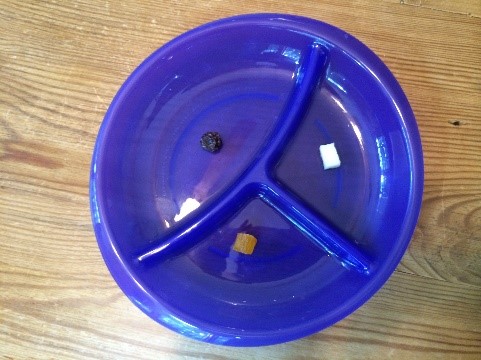
In order to get the special treat, your child has to eat two, which means he has to choose at least one of the new foods. Don’t be surprised if at first your child refuses to eat the new food. Don’t make a big deal about it, don’t scold or raise your voice, or look disappointed. Just say, “Sorry, no bubbles, but we’ll try again next time,” or “Sorry, no candy, we can try again next time,” and put the reinforcer away, take the child away from the table, and go on to something else.
If your child cries or has a tantrum, don’t pay attention to the behavior, just wait until he is calm again and redirect his attention to something else, by getting him engaged in another activity. You should remain neutral and calm. The rule is two foods for the reward, and you need to be consistent about that, but you will never force your child to eat something he doesn’t want to eat. Nor should you act frustrated or upset if he refuses to try something new. We want to keep this a positive experience. It’s important that snack time doesn’t become negative.
Avoid a battle for control around food. Just continue to praise your child enthusiastically for trying new things in general!
If after a week at this phase, with two learning sessions per day, your child STILL has not tried a single new food, it is probably best to discontinue these learning sessions for a while. You can always give it another try after a break of several months. But it is really, really important that you avoid a battle for control around food. Just continue to praise your child enthusiastically for trying new things in general! For example, if you put a new shirt on him, you could say, “Good boy! You tried on your new shirt. I love it when you try new things!” Or, if he tries a new swing at the park that he has never tried before, you could say, “Good for you! You tried a different swing!”