

Beginning Sentence Structure
Once your child can say the names of the people she knows well and has also learned to say action words including eating, drinking, reading, sleeping and cooking, you can begin teaching her how to put words together to make sentences. For example, “Mommy is eating.” Or “Daddy is reading.” Later, you can even expand these sentences to include some of the other words your child has learned. For example, you can teach her to say things like, “Mommy is eating pizza.” or “Daddy is reading a book.”
Materials You Will Need
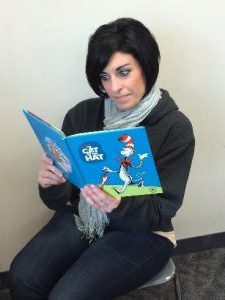
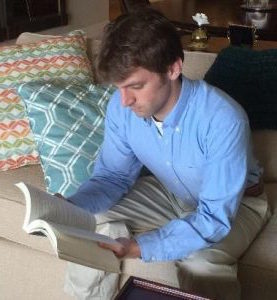
Before you begin, you will need to take pictures of people with whom your child is familiar. These pictures should show familiar people doing things like eating, drinking, reading, sleeping, cooking and washing. We suggest these action words because they are very common. Your child will have seen people do these things many times. Also, it’s pretty easy to take pictures of these things.
You can include other action words as well. The important thing is that there is only one person in each picture and the person is doing only one thing. For example, you don’t want to use a picture of Mommy reading a book while also drinking coffee or a picture of Daddy and Mommy eating together. You can teach those later, but to begin with, keep it simple. Also, be sure to have pictures of different people doing each action. And you will want several pictures of each person doing different actions. Here is a sample list that would be a good set of pictures for the Sentence Structure teaching program.
Eating
Drinking
Reading
Sleeping
Cooking
Washing
|
You will also need to use some of the pictures you first used to teach the names of Familiar People. Those pictures should show only the person’s head and shoulders or upper body. And they should not be doing an action. Here are some examples of pictures like this.
 Mommy Mommy |
 Daddy Daddy |
 Grandma Grandma |
 Grandpa Grandpa |
And you will need one more thing; a small card with the word “IS” written on it, like this:
| IS |
It’s ok if your child cannot read and doesn’t even know his letters. It’s really just a way of showing her that a word belongs in that place. And who knows? Maybe after working on this program for a month or so, your child will learn her first sight-word.
We suggest you begin with a small starter set of about 6 of the pictures described above. These pictures can be of any two people your child knows well. They should be doing actions your child is familiar with and can easily name. For example, pictures of Mommy eating, drinking and reading, along with pictures of another family member doing the same three actions, would be a good starter set of pictures.
 |
 |
 |
 |
 |
 |
Here’s what to do. First, place the “IS” card on the table in front of your child.
| IS |
Then select one of the photographs you have taken of a familiar person, doing something, for example, Mommy eating an apple.
Choose one of the pictures of this person that you used when you were teaching your child the person’s name. This picture should include only the head and shoulders, or upper body, of the person. And the picture should not show the person doing anything. Put the picture of the person’s face to the left of the “IS” card.
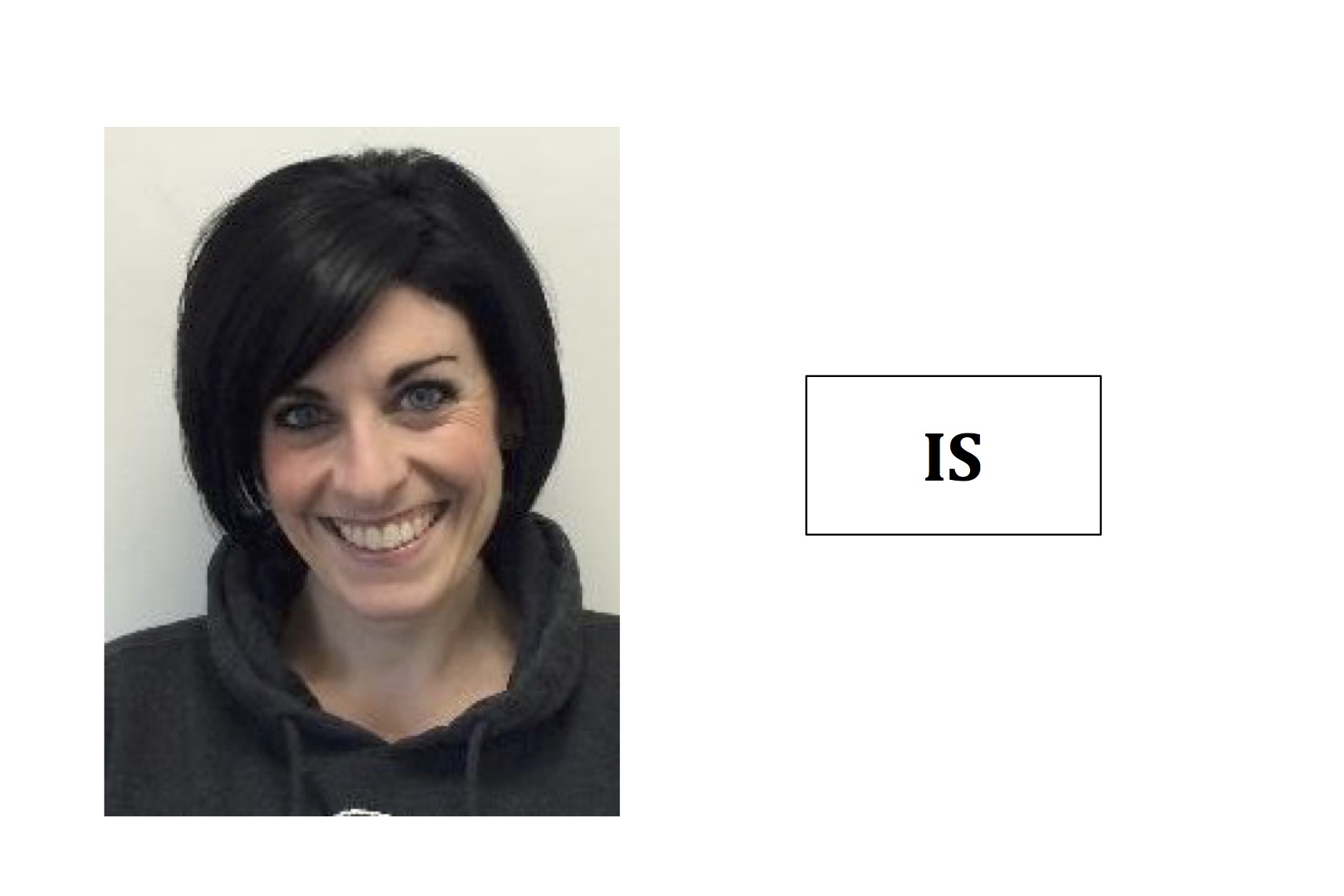
Hold up the picture of Mommy eating the apple
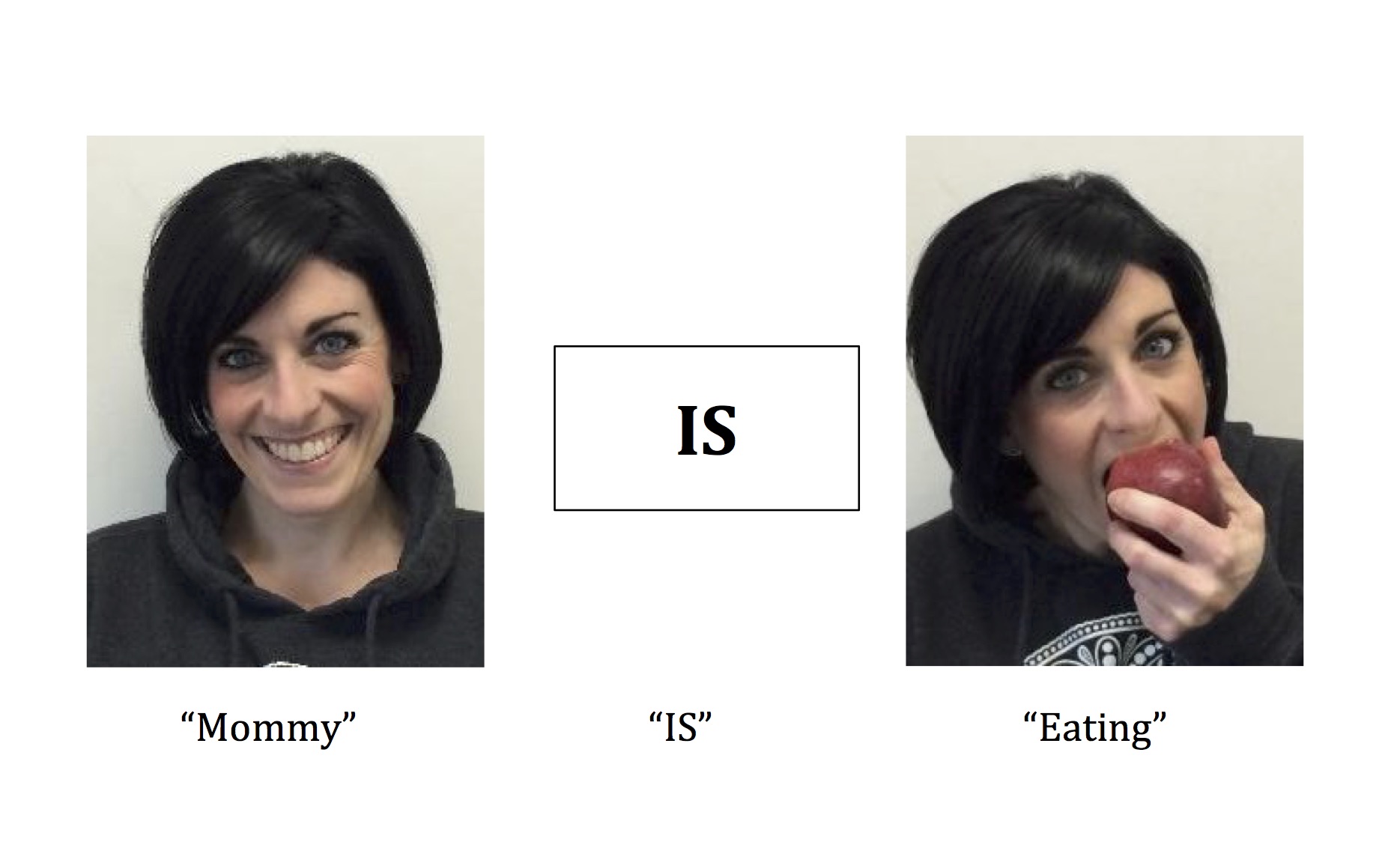
and ask, “What’s happening?” or say, “Tell me what’s happening.”
Then prompt by pointing to the picture of Mommy’s face and saying, “Mommy” then pointing to the “IS” card and saying “is”. Then immediately place the picture of Mommy eating to the right side of the “IS” card, and say, “eating.”
Keeping Track of How Well Your Child is Learning to Use Sentences
Over time, you want to be able to show your child any picture of a person doing a single action and have him tell you what is happening. He can use this simple sentence frame. In other words, he should be able to make a sentence that begins with the person’s name, followed by “is” and then the action word.
If you want more information about how to fade your prompts while teaching your child to use sentences, click here!
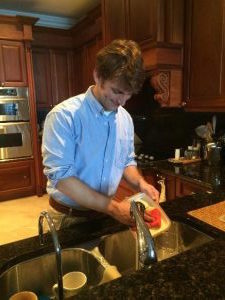
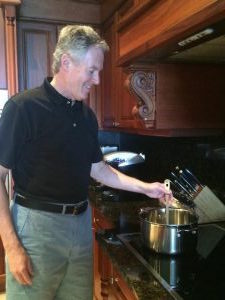
Here are some other examples:
 |
 |
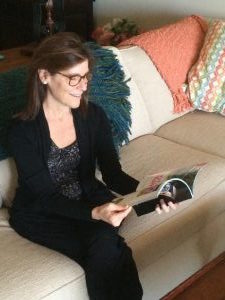 |
| Daddy is washing. | Grandpa is cooking. | Grandma is reading. |
Making the Sentences a Little Longer
Once your child is able to make a sentence to describe any picture for which he knows the person’s name and the action, you can start to prompt for longer sentences. For example, you might show him the picture of Mommy eating an apple. He will likely say, “Mommy is eating.” When he says this, nod and smile at him as you point to the apple in the picture and see if he adds that word. If he doesn’t, use a verbal imitation prompt to model the longer sentence. For example, “Mommy is eating apple.” Or “Mommy is eating an apple.”
If you’re interested in more resources for continuing to learn about teaching language skills to your child, click here!
This is the end of Module 12 of this parent training program. We suggest that you review the instructions for each new teaching program as many times as needed before trying them with your child.
Next are some questions about what you have learned to help you remember some of the material. Some of the questions will have choices, and some will be true or false questions. A good way to work on these questions is to read each question, think about the answer, make your best guess and then read on to have the answer explained. There will be 10 questions. If you answer all of the questions correctly, you are probably ready to try out some of the suggestions we have made in this section. However, if some of the questions were hard for you, or, if you answered them all correctly but feel you could benefit from going through this section one more time, go ahead and review this section again before moving ahead. And remember, it can take children a long time to learn to speak. If your child isn’t yet ready for this, move on to the next section and come back and review this section at a later time.