Adding Eye Contact to Pointing
Once your child is using a point to make requests, the next thing to teach is for him to look at you while making requests. After he points, wait for him to look at you before giving him what he has pointed to. It is really important that your child looks right into your eyes, while you are looking into her eyes even if only for a very short time. As we said before, this is called “making eye contact.” Eye contact is a very important social skill. We will talk more about why this skill is so important shortly.
Once your child is good at pointing, when he points to something he wants, you should wait a few seconds. Do not hand it to your child until he also makes eye contact with you. As soon as he is looking at your eyes, give him the treat right away.
In the next clip, the little boy is pointing pretty well with just a little help. His teacher has started to wait for eye contact in addition to the point. She waits for him to look at her before giving him the blocks he has requested.
If your child doesn’t look at you, you can prompt this by moving your own face a little closer to him so that he will naturally look at your face. But be careful not to get too close. You can also hold the treat near your eyes. This way, when he points to the treat, he is likely to be looking at you too. It might also help to hold his hand in the pointing position until he looks at you like the teacher did in the clip you just saw. Over time you will need to pause only briefly for eye contact and then sometimes not at all.
It’s okay if your child points and then makes only very brief eye contact with you at first. It’s also okay if he looks at you first and then points to the thing he wants. But once you begin working on eye contact, it’s best if your child points and looks before you give him the treat. Over time, you can slowly require him to hold the eye contact for a second or two longer. Just remember that at first, even one quick look is enough. You may hear this referred to as fleeting eye contact. This can last as little as a fraction of a second, but it’s still a good start.
There are some children who learn this very quickly, even though they might have needed this kind of help. For other children, eye contact can seem to be uncomfortable, and they actively avoid making eye contact with others. If this is the case, you will want to be very gentle with your child and reward fleeting eye contact until he begins to feel more comfortable doing it just a little longer. We want all children to enjoy social interaction, including eye contact, but this may happen very gradually with some children.
Watch how this teacher praises the child enthusiastically and opens the ice cream toy he wants right after he makes just a tiny amount of eye contact. Over time, she will very gradually require more eye contact. By doing this, the child will get better and better at it. Your real goal is for your child to hold eye contact with you for about as long as other children of his age. This might be around 2 seconds or a bit longer. When first adding the requirement that your child make eye contact in addition to the point, you don’t want to frustrate or confuse him. So remember, even fleeting (very short) eye contact is good enough at first.
In the next clip, the same little boy is choosing a drink for his snack. As he points to the juice the teacher, squats down so that she is at his eye level and waits to give him the juice until he looks at her.
This teacher has also been teaching this little boy to say, “Thank you.” You might notice that she prompts this by offering him the cup of milk but then holding onto the cup and modeling the mouth position for the “th” sound until he says thank you. Then she immediately releases the cup.
Not every time, but sometimes you should praise your child for looking at you while you are handing him whatever he has requested. You should always use a pleased and happy tone of voice. You might say, “Nice looking at me!” one time, or “Love those beautiful eyes!” the next time.
At other times simply smile at your child as you hand him the treat. If you are using a snack as a treat, give your child plenty of time to eat it before beginning your next practice trial. If it’s a toy, let him play with it for a short time. Then you can gently take it back or show him that there are other things he might like. He just has to ask for them. And remember to use toys like puzzles and shape sorters with several pieces. Then, you don’t need to take anything away from the child before he makes another request.
If you have been prompting eye contact by holding the treat or toy close to your eyes or squatting so that your eyes are at your child’s eye level, then you will have to fade your prompts. Slowly fade your prompts until your child is making eye contact all by himself. Fade your prompts by moving the treat a little farther away from your eyes. You can also bend down a little less so that your child has to look up a little to make eye contact with you. You should do this until your child is looking at you almost all the time before or after he points to what he wants. This should be done with little or no help from you. This might take weeks or even months of practice, so you have to be patient.
Addressing Behavioral Problems
Some children will quickly become frustrated when you start to require them to point and look. After all, when they were first learning to point, they got what they wanted right away, just for pointing. Now they’re not getting it as quickly as they were before. They may not understand what it is you want them to do. They also may have very little patience when trying to figure it out.

It’s important that you NOT give your child the things he wants when he cries and fusses. This is because you do not want to reward the crying and fussing. If you reward the crying and fussing by giving your child what he wants, he will be more likely to cry and fuss the next time he wants something from you. Instead, you want him to communicate by pointing as you have taught him.
If you think that your child is having a hard time learning to point and is getting frustrated and fussy, put your hand over his to physically prompt him to point. Then, help him actually touch the thing he wants. As soon as your child touches it, say, “Nice pointing!” and give him the thing he wants. In general, when your child needs a prompt to do something, reward it as if he did it by himself anyway.
Finding Opportunities to Practice
It may take your child weeks or even months to learn how to ask for things by pointing at them while looking at you. While he is learning, try hard to give him all the help he needs to be successful. You don’t want him to become frustrated. And once your child has learned to point to what he wants and then look at you, make sure you give him lots of chances to practice this important skill. Look for chances to practice requesting in places where your child will be most likely to use this skill all by himself.
Help your child to practice requesting food he likes during meals, with favorite toys during play time, or with favorite bath toys during bath time. You can give your child small amounts of the things he enjoys, and put more of them just out of his reach. For example, when you sit down for a meal or snack, you might give your child only a small amount of his favorite food. Put a bowl with more of the same food where he can clearly see it. When he finishes the food he has, wait to see if he points to the bowl with more of the food. If he doesn’t, you might move it a little closer to him. If necessary, prompt him to point at it and look at you before putting more of the food in his plate.
If this seems to be hard for your child and he becomes frustrated when you are working on this during meal-times, you should practice it only two or three times during a single meal-time. Do not practice this when he is very hungry. Give him at least half the regular amount of food you would feed him at a meal before helping him to request more. You will have plenty of chances to practice this skill. You do not want to frustrate your child and basic nutrition should always come first.
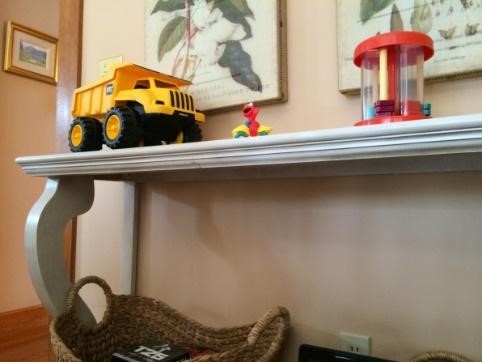
Be sure to give your child lots of chances to practice requesting different things using a point paired with eye contact. You can encourage this by placing some of his favorite treats and toys around the house. Place these things where he can see them, but he cannot reach them. For example, you could put them on a table, counter or shelf. When he notices the treat or toy, watch to see what he will do. If he reaches for it, or tries to climb towards it, just help him to form a point and wait for eye contact before giving it to him.