

Action Words
Teaching children action words (verbs) is quite similar to teaching the names of familiar people. You’ll need a set of pictures for each action. You can easily find pictures for action words through a quick Internet search. Look for pictures of people eating, sleeping, reading, cooking, and drinking. As we said before, all the pictures in this program are in the public domain. If you like, you may download or copy and paste them into a document. Then you can print them to use in teaching your child.
Eating

Watermelon: itoldya images, strawberry: wikimedia, Muslim boy: Pixabay, black kid in cafeteria: Public Interest Research Groups
Sleeping

Medscape, flipkart, freepik.com, pixabay
Reading

Pixabay, Flickr, freepik
Drinking

Pixnio, Peakpx
Cooking

Pexels, https://kcoptimist.weebly.com/, #3 sent to GM, man and boy cooking together:
Walking
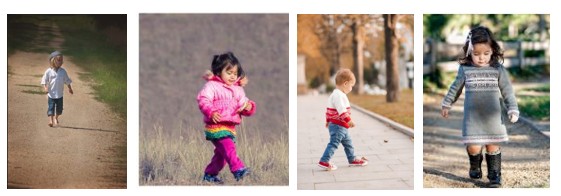
Pixabay, pixabay, freepik, peakpx
Running
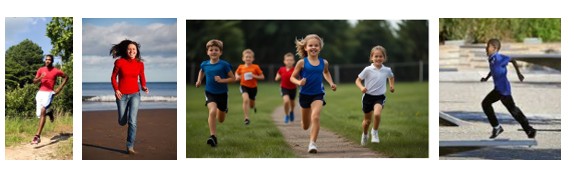
Freestockphotos.biz, Pxhere.com
In each picture, there is usually only one person, making it easy to see what they are doing. Even in pictures with multiple people, they are all doing the same thing, with one person standing out in the front. You’ll also see a variety of people, including men, women, boys, and girls, performing these actions.
Here are 20 common action words. These are all things that your child has likely either done himself or has seen others do.
| Eating | Drinking | Sleeping | Reading |
| Cooking | Playing | Brushing | Running |
| Walking | Jumping | Riding | Sitting |
| Hugging | Kissing | Smelling | Looking |
| Holding | Washing | Throwing | Catching |
Test to See if your Child Already Knows Some Action Words
As always, when you start, it’s a good idea to test if your child can pick the right picture without prompting. Lay out three action pictures and ask your child to touch one of the action words, like “touch drinking” or “touch reading.” If your child responds correctly three times in a row with different picture positions and no help, that’s great! You can test more pictures. If your child already knows some action words, include those in the mix.
Teaching Program: Receptive Action Words
Just like with other receptive language programs, start with three action words that your child sees or does daily. It’s best not to teach eating and drinking at the same time since children can confuse the pictures. Choose any three action words that are clearly different from each other.
In the following clip, the teacher presents three pictures: reading, drinking, and sleeping. The boy already knows drinking and sleeping but is learning “reading.” Notice how the teacher prompts him only when telling him to touch the picture of reading. She reinforces him when he responds correctly, whether prompted or not.
You may have also noticed that the teacher praises the child for touching the correct picture and often repeats the action word in her praise. For example, “Yay! Nice work! You touched reading!” This reinforces the connection between the picture and the word.
As always, when you teach your child to pick the correct picture from a group of three, be sure to change the location of the pictures after each trial or two. Present them in an unpredictable (random) order. Gradually fade your prompts over time until he has learned the action word(s) well and will touch or point to the picture of whatever action you name. He should be able to do this all or most of the time.
Adding a Fourth Action Picture
Once your child has mastered three action pictures and responds correctly in at least 8 out of 10 trials, you can introduce a new action picture. Mix it with two pictures your child has already learned, in a random order. For example, if your child can reliably point to the correct picture when asked to touch drinking, reading, or sleeping, you can add cooking as the next action word. Place a picture of a person cooking on the table alongside two other familiar pictures. Here’s an example of how to introduce “cooking,” changing the positions of the pictures:
Trial # 1: “Touch cooking.” (Full prompt)
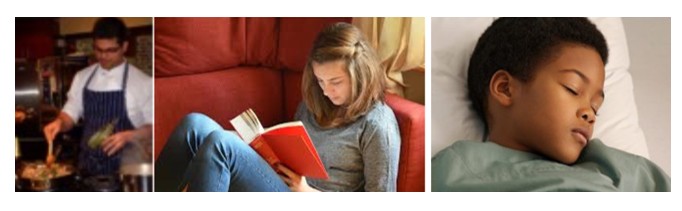
Trial # 2: “Touch cooking.” (Full prompt)

Trial # 3: “Touch sleeping.” (No prompt.)

Trial # 4: “Touch cooking.” (Prompt by pointing to the picture of cooking and actually touching the picture with your finger.)
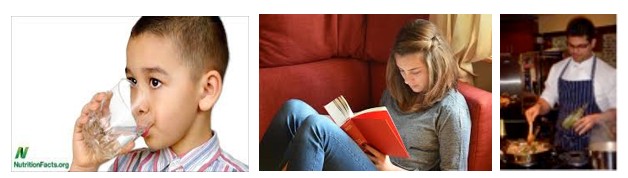
Trial # 5: “Touch reading.” (No prompt)
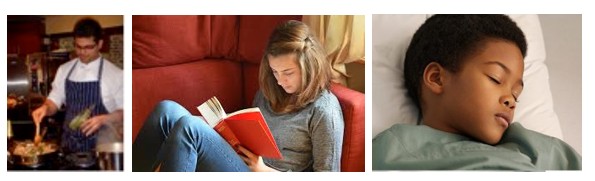
Trial # 6: “Touch cooking.” (Prompt with finger a few inches away from the picture.)
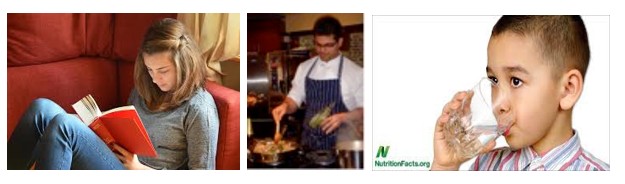
Trial # 7: “Touch drinking.” (No prompt.)
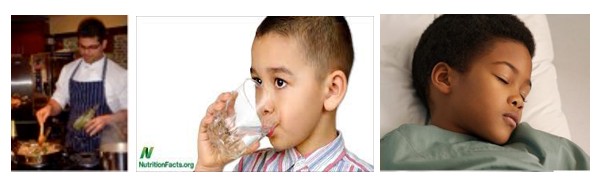
Trial # 8: “Touch cooking.” (Prompt with finger a few inches away from the picture.)

Trial # 9: “Touch cooking.” (Probe – that is, do not prompt and see if can point correctly with no help.)
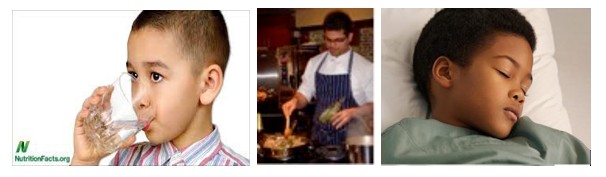
Trial #10: If the child responds correctly on Trial #9, praise enthusiastically and reward with a treat. You can either take a break or present one more trial, trying cooking again or an action he learned already, like drinking. Always end on a positive note! Remember to change the order of trials in each learning session and from day to day.
Use Different Pictures of People Performing the Same Action
Once your child has learned four or five action words with one set of pictures, repeat the teaching program using different pictures of the same actions. Use pictures showing different people doing the same action with different objects to encourage generalization. For example, if you taught “reading” with a picture of a little boy reading a book, you can use a picture of a girl reading a magazine next. This helps the child understand the meaning of “reading” not just with one person or one type of reading material.
Introduce new pictures of one action at a time. Your child may need to be taught each new picture. Stick to this small group of actions without adding new ones until your child can easily touch or point to any action you name. If he has really learned the action, he will be able to point to it even with new pictures showing those actions. This shows that your child truly understands the meaning of the word for that action. Gradually add new action words one by one in the same way. Make sure your child can identify several different pictures for each action word.
Remember to keep a list of the action words your child learns and continue adding to the list as they learn more new action words.
MASTERED ACTION WORDS
- Drinking
- Sleeping
- Reading
- Cooking