

A Program To Increase Your Child’s Food Repertoire
Build Tolerance for New Foods on the Plate
When your child can accept having some new or non-preferred foods on the table near him, you can work on getting the child used to having these foods on his plate. At this point, you don’t ask him to eat the new foods. What is important is that he is ok with eating foods he likes when they are next to new foods. Remember not to start this until your child is ok with a variety of new or non-preferred foods on the table next to him.
What is important is that he remains willing to eat preferred foods when they are alongside new foods.
When you start this, you will have used your child’s food diary to select a couple of new foods that are like foods your child likes. Once your child is ok when you move those foods closer and closer to his place during meal and snack times, you can move on. Put a small amount of a new food on his plate during snack time along with small amounts of two favorite snack foods. If you have a child-safe plate with three sections, this would be a great plate to use for this program
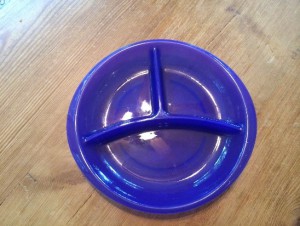
.
However, if you do not have a plate with compartments, don’t worry. A regular child-safe plate is fine.
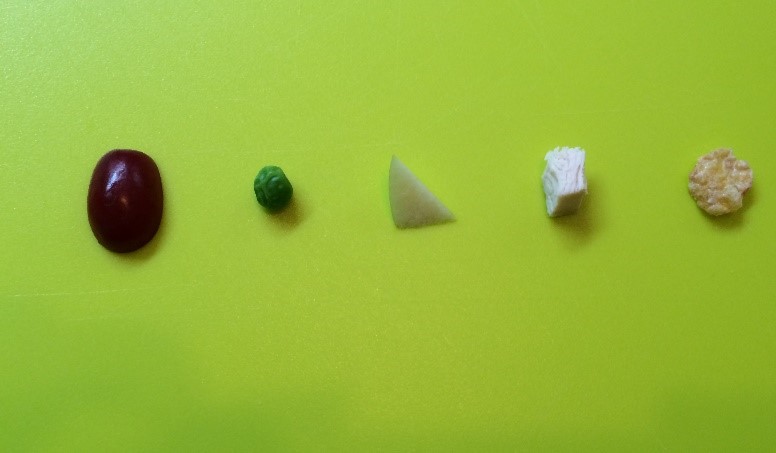
It’s best to start with small pieces of food that your child can pick up with his fingers.
If the things he likes need a spoon, like applesauce, then allow him to handle the spoon if at all possible. Let him put it in his mouth by himself. Remember how much children like to control what they eat.
Put on the plate very small amounts of two favorite foods that the child really, really likes and one of the two new foods you’ve picked. For example, if the child likes cornflakes and blackberries, we could pick blueberries for the new food because they’re like blackberries.
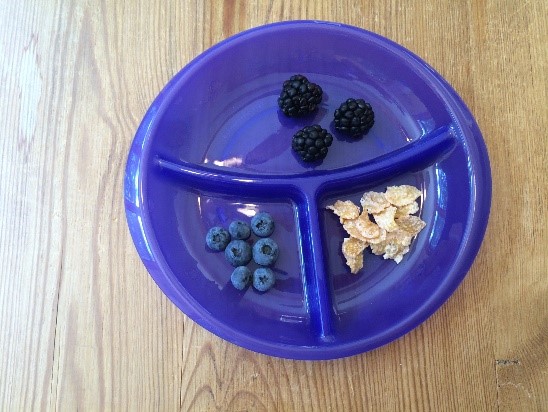
We suggest you have two new foods picked out and ready for your child to try. That way, there’s a better chance that at least one will be ok to the child. In this case, the second new food might be Cheerios, because Cheerios are like corn flakes. Feel free to try the two new foods in any order that you like. If you find that one works, you can stick with that for a while. It’s up to you. When you give your child the two favorite foods and one new food, just let him eat what he wants from the plate. Do not force, or even push or help him, to try the new food.
When you give your child the two favorite foods and one new food, just let him eat what he wants from the plate. Do not force, or even encourage him, to try the new food.
If your child finishes the two preferred foods and leaves the new food that’s fine. If he requests more of the preferred foods, it’s ok to give him another very small helping. If he has not requested more of the preferred foods, go ahead and offer him a little more of whichever foods he finished. Remember, the object at this point is simply to teach him to allow the new food on his plate. Make sure that the non-preferred food is not always in the same place on the plate. By presenting one or the other of the two new foods you have selected at each snack time, these “new foods” will begin to look and smell more familiar. When your child seems very comfortable with the first two new foods you have introduced, you can add a third new food into the rotation.
Exposure to New Food Over Time Will Allow the Child to Be Comfortable with the Food
Since at this time, you will not even encourage him to eat either of the new foods when they appear on the plate, he should begin to accept the new foods on his plate. Be patient. It may take weeks or even months before your child is really comfortable with new foods on his plate during his snack time.
Be patient. It may take weeks or even months before your child is perfectly comfortable with new foods on his plate during his snack time.
Of course, it’s possible that over time, your child will not only become comfortable with new foods on his plate, but that he will try one or more of the new foods on his own. If this happens, praise your child, and maybe even offer an extra treat for having tried something new. You should use your judgment here. Some children will become so familiar with the “new foods” you chose that they may try one of them without even realizing it. If this is the case, you might not want to draw too much attention to that fact. And if the child enjoys the new food, eating it will serve as a natural reinforcer for trying something new.
Adding More Food
Use your judgment. If you think it will add to your child’s enjoyment, offer whatever reward you think will work best. You could offer a very special food treat, quiet or happy praise, or maybe both. In any case, if your child has tried one or more new foods, just because they were always on his plate, you should slowly add more of the “new” food to your child’s plate. Once it becomes another of his accepted foods, you should continue to use this method to introduce more new foods.
Be sure to use very small pieces and go slowly. If your child eats a few Cheerios for a few days in a row, you could put a few extra Cheerio’s on his plate the next time. And once he’s ok with them, and eats the Cheerios when you offer them, you could add Cheerios to the list of preferred snack foods and try another kind of cereal. Or, if he begins to eat blueberries, you could offer blueberries as one of the familiar, preferred foods and try a different kind of new fruit. You could try a few raspberries or a strawberry, cut into small pieces. Try to add new foods that are like the new foods he has accepted, or like foods that he has accepted before. But if he prefers only things like corn flakes, crackers and Cheerios, he’s probably not ready for asparagus!
If your child has not tried either of the new foods you have selected, but is tolerating them on the plate, you should move on to the next step.