

A Few More Words About Pointing…
Even if your child can already ask you for the things he wants using words, he should still learn how to point. Your child will likely not have the words to ask for everything he wants or needs or for everything he wants to show you. Pointing is a very important way for people to show others what they want or what they’re thinking about.
Imagine a trip to the zoo, or an aquarium or even just a walk in the woods or a trip to the market. As we walk along, we point to the animals, fish or plants in order to share our thoughts with one another. This is sometimes called joint attention or shared attention. This is a very important part of social communication. Joint attention is likely to occur when there is something worth sharing. Things that make us feel strongly are things we tend to share with other people.
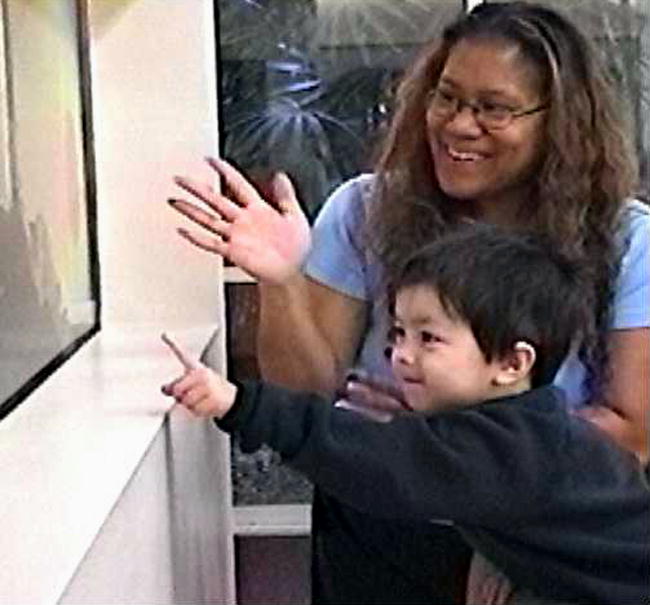
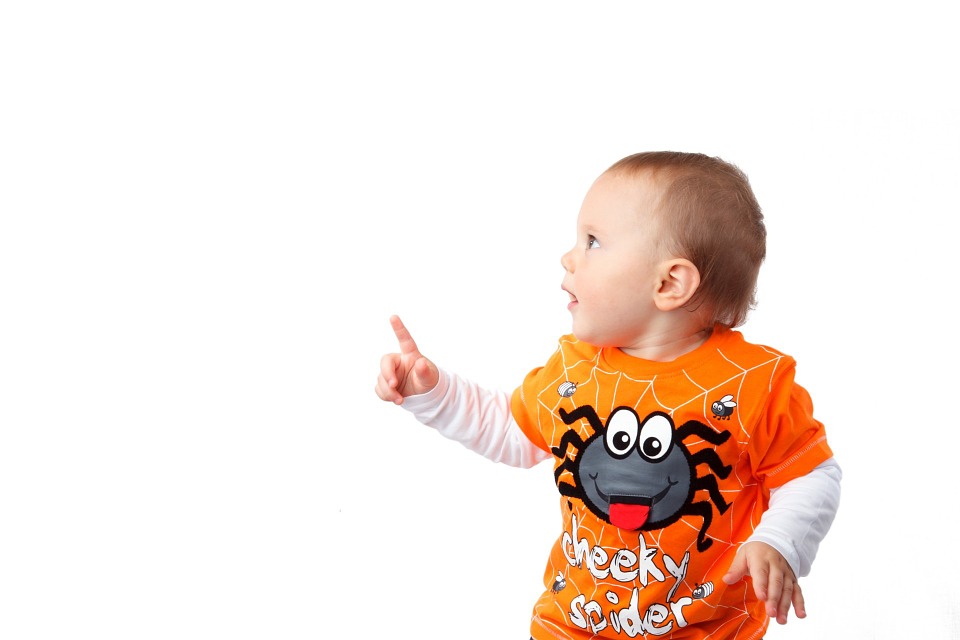
Wikimedia & Pixabay
One way to work on joint attention is by using books. “Lift-the-flap” books or books with pictures of things your child is interested in, can work well. In the next clip, watch how the teacher prompts the child to share his experience with her. She stops him from lifting the flaps or turning the pages until he makes eye contact with her. His reward for making eye contact is that he gets to see the next picture. He catches on pretty quickly and seems to enjoy sharing this experience with her.
In the next clip, encouraging him to share the experience is even easier.
In the next clip, another teacher uses a very similar method to encourage eye contact. This makes looking at the book together a truly shared experience. Watch how she gently places her hand over the child’s hand to prevent him from showing her more pictures, until he has made eye contact. He is clearly enjoying naming the pictures. So, continuing with that is the reinforcer for sharing a moment of eye contact with his teacher.
Now watch as a little boy uses a point to show his teacher a picture he made. She prompts for eye contact by gently turning him toward her. She then waits for him to look at her before she gives him happy praise for his beautiful painting.
Then later on the same day, an exciting thing happened! His very favorite person, Mommy, walked into the room. He had not seen her for most of the morning. He was surprised and happy when he saw her. He did a beautiful job, using a point and eye contact, to share his joy about seeing Mommy with his teacher.
Another easy way to practice “pointing to show” things to others is to find some interesting or funny items or pictures and tape them to the wall or place them on three chairs or boxes. You can ask your child to “show” you which one he thinks is funny or which picture he likes the best. For example, find a couple of pictures of dogs and then find one of a dog wearing funny clothing or sunglasses. Print them out and tape them to boxes or to the wall a few feet apart. Ask your child which one he likes best or which one he thinks is funny.
Or find some pictures of cartoon characters that aren’t your child’s favorites and one that is a very favorite and tape them to the wall or to boxes or chairs. Ask him which one he likes the best or which one he thinks is the prettiest, funniest, or happiest picture.
If your child likes construction equipment like backhoes, tractors, or bulldozers, find pictures of those. Whatever you think your child would enjoy looking at will work. Just encourage him to share the experience with you by showing you his favorite things. Hand him the picture he likes the best and talk about it or look for more like it. This is a great natural reinforcer for having shown you his favorite.
Requesting Without Words
If your child can already ask for what he wants using words, but does not point, you can turn requesting without words into a game. This might make it more fun for him to practice the important skill of pointing. Hold up two pieces of the same treat and ask your child to show you which one he wants without using any words. This is the same as teaching a child to make a choice using a point, paired with eye contact.
Here’s another idea. Place pieces of treats or toys around the room. Tell your child he must ask for them without using any words! Now watch as the same little boy learns how to point to things that are farther away. He loves to slide things down the slide, so his teachers have placed things around the room that he can request using a distal point (pointing from a distance). His reward for pointing to one of the figures is that he gets to give it a push down the slide.
Of course, you should give your child all of the help he needs. Use whatever kinds of prompts you think would work best to help him to point. For some children physical prompts will work well. Or, if your child can imitate simple actions you may show him how to point and have him imitate you. We will talk about imitation in a later module of this program.