

Games For Learning While Doing Errands
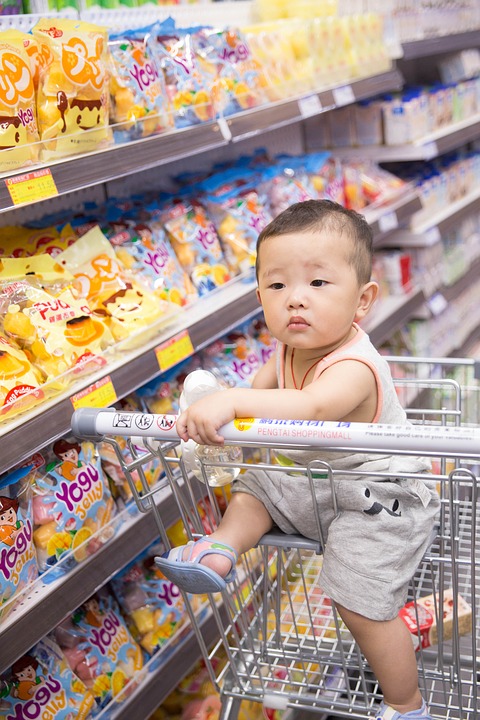
1. WORKING ON WAITING PATIENTLY AT THE MARKET
A good thing to work on in the supermarket or grocery store is the idea of waiting. Very young children won’t be able to wait long without becoming fussy. So don’t ask your child to wait for more than a couple of minutes. You could pick up a favorite treat, like a package of chips or cookies just before check-out and say, “We have to wait. After we pay, you can have a cookie.” Then, as soon as you get through the checkout, open the package and provide a cookie for “nice waiting.”
If your child has trouble waiting for a few minutes and fusses to get the cookie, try teaching her to wait for a very short time by going to the market to get just 2 or 3 things. Think of this as a teaching visit rather than a shopping visit. Pick up the cookies and then head right for the express checkout, saying, “We have to wait; after we pay, you can have one.” Make the waiting time as short as you needed to get success. Then you can lengthen it a little bit each time you visit the market.
2. STAY WITH ME – A SIMPLE BEHAVIORAL PROGRAM FOR THE MARKET
Your child may enjoy walking around with you at the market but tends to run off if you aren’t holding on to her. Here is a simple behavioral program for teaching her to stay with you. Bring along a small Ziploc bag with a special treat that your child enjoys, for example Goldfish crackers or pretzels. Give your child the instruction “stay with me.” Then, prompt her to stay with you by holding her hand or having her hold onto to the cart. If needed, you can close one of your hands gently over hers. After a few steps, but before your child tries to pull away, stop briefly, and praise her for staying with you. Then give her a small piece of her treat. Repeat the instruction to stay with you and begin walking again while she is still eating her treat. Add a few extra steps this time before pausing to praise her for staying with you. Give her another piece of her treat. And be sure to show her how happy you are that she is doing such a good job staying with you. Continue to do this, giving her the instruction “stay with me” and adding a few more steps each time. Gradually add just a little bit more time, a few more steps, before rewarding her for staying close. Before long, you may be able to walk the length of an aisle, stopping to select items from the shelves and offering only one piece of the treat at the end of each aisle. Maybe you won’t even have to hold onto your child’s hand.
Get her involved in helping you pick up the items from the shelves and putting them into the cart. That way, she will be less likely to try to wander off. Even if she doesn’t yet understand the names of the things you want to buy, you can point to an item. Prompt her to pick up the item you have pointed to and put it into the cart. Then praise her for being such a good helper! Once she gets the idea and begins to enjoy this activity, trips to the market should get much easier.
Some markets have small carts that children can push themselves. These small carts are also easier for small children to reach inside. Then they can deposit the items they have picked from the shelves without help. The more your child can help with the shopping, the more fun and social the shopping trip will be.
3. FROM MARKET MATCHING TO A VISUAL SHOPPING LIST
Another way to use pictures is to work on simple matching. For example, let’s say you’re going to the market to buy a box of Cheerios and a carton of milk. Cut out the front of an old Cheerios box and a colorful part of an old milk carton. Then walk down the supermarket aisle, letting her hold the front panel of the Cheerios box or milk carton and look for the matching box.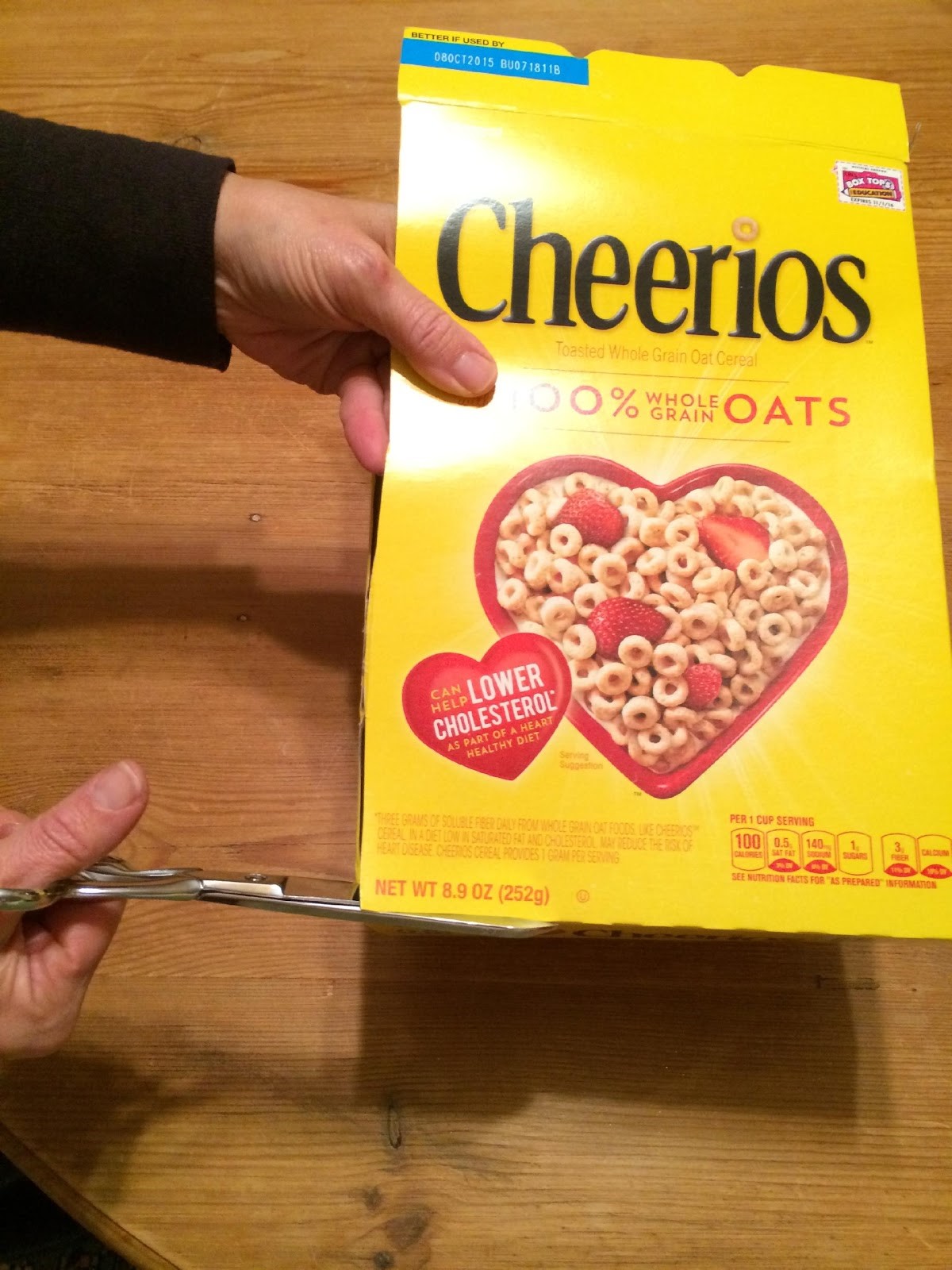
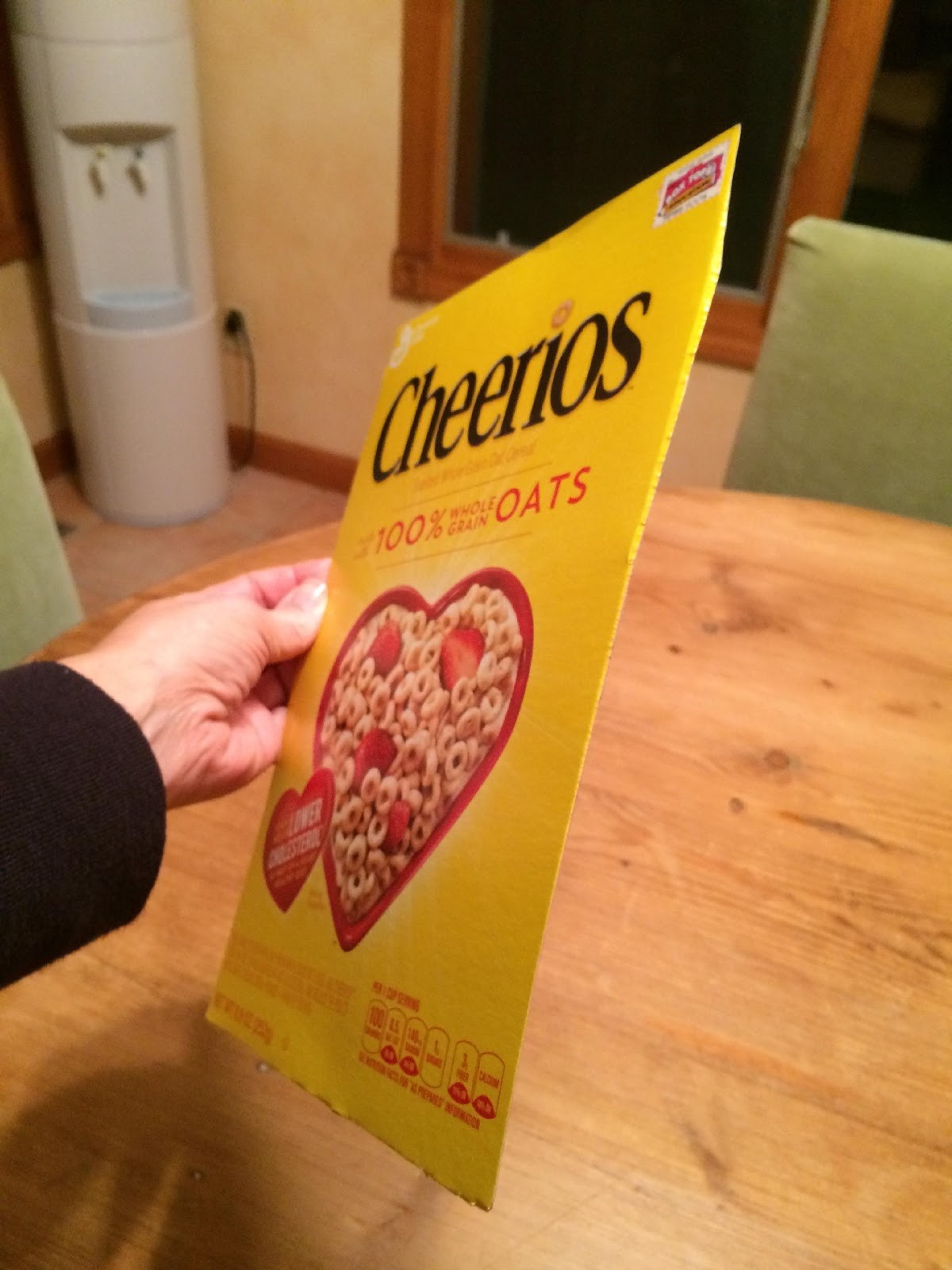
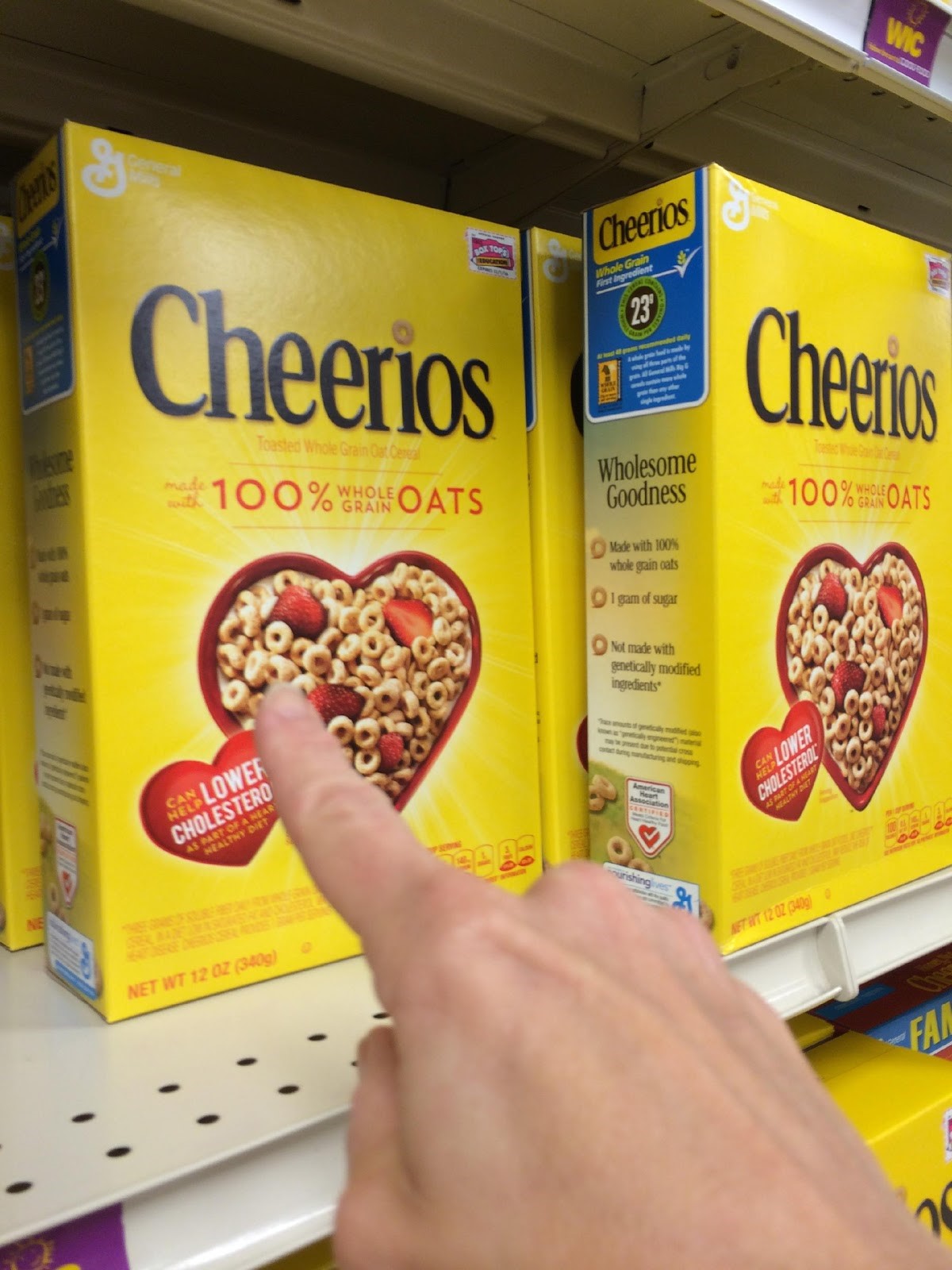
If your child doesn’t find the matching food item, prompt her by pointing to it. Help your child to hold the matching box panel, for example the Cheerios box cover, next to one of the Cheerios boxes on the shelf.
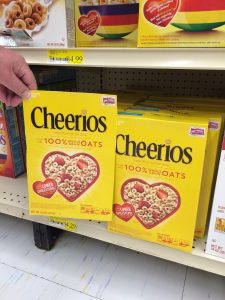
Prompt her, if necessary, to take the box of Cheerios from the shelf and put it into your shopping cart. As always, be sure to reinforce with praise when she finds the correct product. Praise her again when she puts it into the cart. Here is a little visual shopping list for three items, milk, cookies, and an apple.
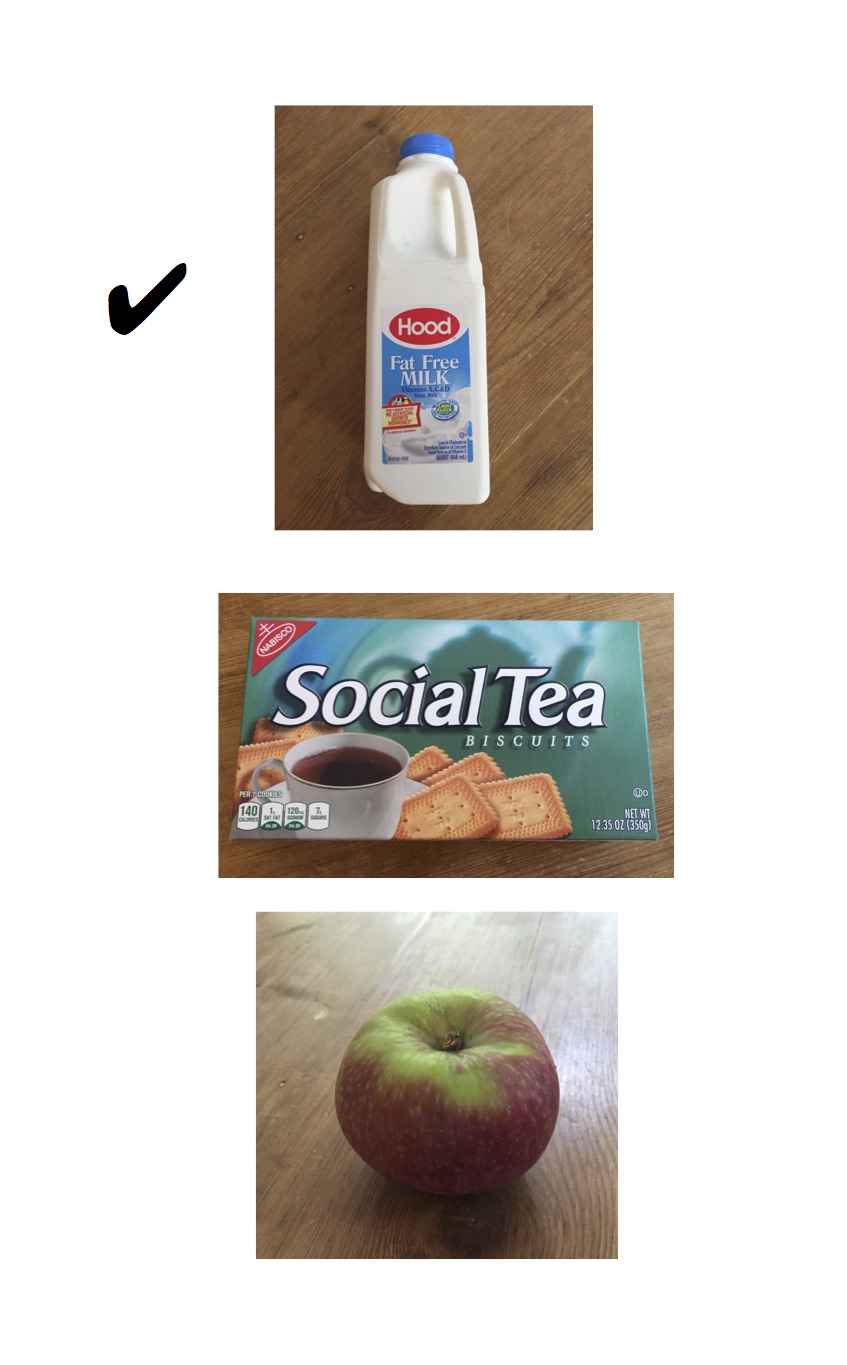
By keeping children involved in the process of shopping, your child will be less likely to show problem behavior that is so common with children at the market. You can let your child know that if she stays with you and finds all of the items on her list, she can have a treat.
4. MAKE A “WHERE DOES BABY GO” BOOK TO TEACH THE NAMES OF PLACES
You can take or download pictures of places you go (like the market, bank, park, etc.) and put them into a small photo album for your child labeled, “Where does baby go?” You could make a repetitive book out of it and add it to your bedtime and naptime story collection. Use the same sentence starters each time you or your child turns a page. This will help her to learn the place names. For example, the book could say, “Where does Baby go? Baby goes to the park.” Or “Where does baby go? Baby goes to the market.” When you read the book to your child, put the emphasis on the name of the place. If you do this often, after a while you could begin to leave off the last word or pause and look at your child expectantly to see it she tries to fill in the blank. Later on, if you bring the photo album with you on errands you can teach her to “match” the real place with the picture by helping her to flip through the book until she finds the picture of the place where you are.
5. USING YOUR PICTURES OF PLACES TO WORK ON REMEMBERING
You can also work on remembering things by going over the pictures of where you went as soon as you come home. A very young child may not be able to recall where she was several hours earlier, but you can try this just after you arrive home, maybe while she is seated at the table having her lunch or a little snack. Lay out the pictures of the places you have just visited in the order in which you visited them. For example, you might say, “We went to the market and we got apples and cookies. Then we went to the playground. Jenny went down the slide. Then we drove home in the car.” Point to the pictures in turn as you say the names of each place and recall the events of your outing.