

Games For Mealtimes
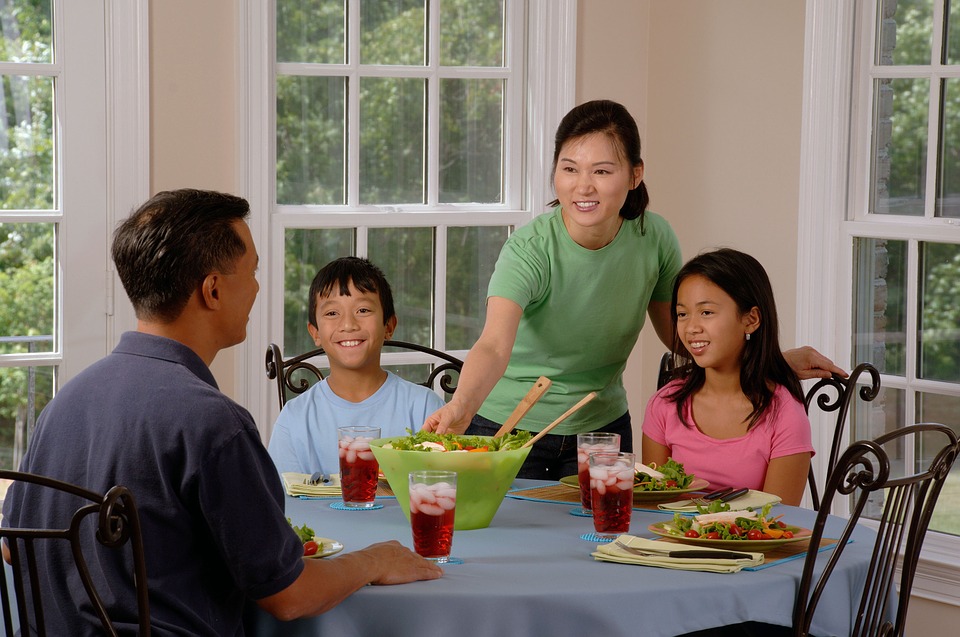
Mealtime is a great time to work on requesting and making choices. When a child is ready for dinner, food will be a powerful reward. This makes mealtime a good teaching time. But remember, if your child is very hungry when mealtime starts, she may get very frustrated if she has to make requests or choices. If you think she is feeling very hungry, make sure to give her plenty of food right away so that she is less hungry before you start to work on requesting or making choices.
1. PUT ONLY A FEW BITES ON YOUR CHILD’S PLATE AT ONE TIME TO WORK ON REQUESTING
Put only a small amount of food on your child’s plate with more on a second plate, just beyond her reach. Then you might be able to encourage her to make several requests for more of the food. Place a bowl with more of the same food where she can see it. When she finishes with the food on her plate or in her bowl, wait to see if she points to the bowl with more of the food. If she doesn’t, you might move it a little closer to her. If necessary, prompt her to point to it and look at you. After she requests the food by pointing, even if she needed help to point, put a little more of the food in her bowl or plate. You can do the same thing with drinks. For example, you could pour her only a small amount of juice instead of a whole cup. When she finishes that, she’ll most likely want more! You want to give your child lots of chances to practice asking for the foods and drinks she enjoys.
And remember, if your child is learning to use PECS (the Picture Exchange Communication System) to communicate her wants and needs, mealtime is an excellent time for your child to practice using pictures to ask for her favorite healthy foods and drinks.
If your child is learning to say some words, see if you can get her to add a word or a sound to her request. So, for example, if she has been requesting waffles and seems to want more, try prompting her to say the word, “waffles” or even just the “w” sound. Whenever she requests food, by looking at you and pointing to the food she wants, or by saying a sound or a word, make sure you give it to her immediately. And let her know how happy you are that she did such a nice job asking!
But this is important: If any of this seems to be hard for your child and she becomes frustrated, you should practice it only two or three times during a single mealtime. Then put the rest of her meal on her plate. There will be plenty of chances to practice this skill with your child. You can build in more and more practice trials at each meal over time. You do not want to frustrate your child. And, make sure she gets her basic nutrition. That always comes first.
If your child is a very fussy eater, and does not like a lot of different foods, it may be more important to get a healthy amount of food into her than to work on requesting. In this case, you could try putting only a very small amount of a sweet dessert on her plate, and encourage her to request more of the dessert, rather than requesting the basic food she needs for nutrition.
If your child is such a picky eater that you’re not sure she’s getting all the nutrition she needs, see if the suggestions in Module 7 Picky Eating are helpful. And you should keep a diary of everything she eats over a few days or a week and ask your pediatrician to either look it over, or refer you to a dietician or nutritionist to make sure she’s getting all the nutrition she needs.
2. CHOOSING BETWEEN TWO PREFERRED FOODS
Mealtime also provides the perfect time to offer your child choices. Choosing between a bite of food and a sip of a drink, or between two different kinds of food, is a great way to work on making choices. Simply hold up both choices in front of your child and look at her. Some of the time, you can ask, “Which one?” or “Which one would you like now?,” but it’s best not to ask that every time. Once she has the idea, just hold up the two choices and let your child make a choice. If she doesn’t make a choice, prompt her to point to whichever one you think she might like. For example, if she has been eating bites of chicken, perhaps she would like a sip of her milk. In that case, just prompt her to point to the cup and then say, “Milk” or “Milk, please!” Then give her a sip right away.
3. PRACTICING PECS AT MEALTIMES
If your child has been learning PECS (the Picture Exchange Communication System), where she hands you a picture to request something, mealtimes are great times to work on this. She can request using a single picture for one food. She can also work on making choices using two or more pictures. If you have not yet taught your child to make requests using PECS and your child is not yet speaking, you might want to review the section on PECS and try it out with your child at mealtimes.
4. USING SPOON FEEDING TO IMPROVE EYE CONTACT
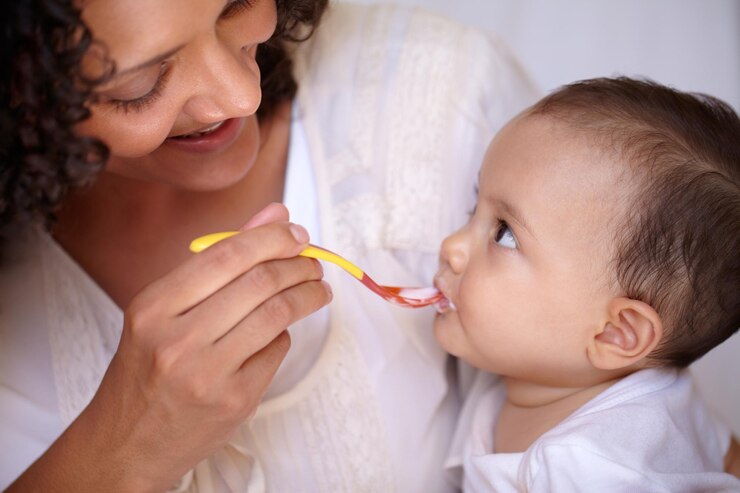
If you sometimes feed your child with a spoon or fork, even if she can already eat by herself, it will make it easier to work on eye contact during mealtimes. Simply wait for eye contact before giving the child each bite of food. Just hold up a spoon or a piece of food and, once your child makes eye contact with you, give her a big smile while putting the food in her mouth.
The bite of food is meant to reinforce eye contact while making the meal a shared social time. Just changing this one thing at your mealtimes, the timing of the bites, will make each bite of food a reinforcer for eye contact. Just think of how many extra times you will have each week to work on improving your child’s eye contact! And you will be doing this during time already planned for feeding your child her regular, healthy meals.
5. THE SILLY MOMMY ROUTINE TO ENCOURAGE YOUR CHILD TO ASK FOR HELP
One way to get your child communicating with you, is to “play dumb.” For example, you could hand her a cookie that you have put inside a sealed Ziploc bag or a tightly sealed plastic container. Or you could give her an unopened juice box with the straw removed. The important thing is that she can clearly see that something she wants is inside of a container that she will need your help to open. Then wait for her to communicate in some way that she needs help. She might look at you with a questioning or confused look. Or perhaps she will hold the container up to you as a way of asking for your help. If she does none of these things or becomes frustrated, prompt her to do something very simple, like hold the container up to you.
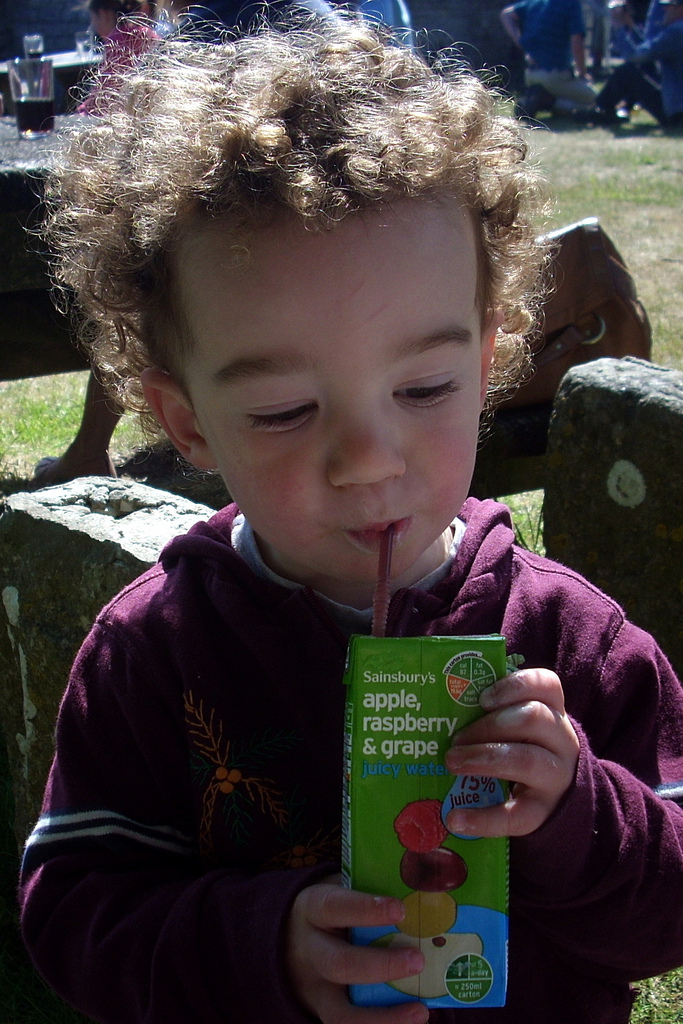
Whatever she does, you should immediately reinforce her attempt at communication by helping her to open the container and giving it back to her. As you do so, you can say something like, “Silly Mommy! That container is too hard to open! I’ll help!” Or, “Silly Mommy! No straw! I’ll help!”
Hopefully, these situations will encourage your child to look at your face and try to figure out how to let you know what she wants.
If you do this once or twice each day with some different things, you can help her do just a bit more to get your help. For example, if your child simply looks at you, you could prompt her to lift the container towards you. But if she is already doing that, you could prompt her to say the word “help” or the word “open.” If she is not yet speaking or able to imitate sounds and words, you could teach her the sign for “help” which looks like this.

Here’s a good way to encourage language development: Use sentences that are just a little longer or more complex than the ones your child is using. Do this about half the time that you’re speaking to her. For example, if your child isn’t talking, make sure there are plenty of times during the day that you are using only one word at a time to communicate. In this case, you might just use the word “help” or “open.”
If your child is using one word at a time, try using sentences with just an extra word or two. For example, if your child says “juice” you could respond by pairing the word juice with just one other word, like “Apple juice,” “Open juice,” “Baby’s juice,” or “Drink juice.”
A good way to encourage more speech in a child who is using single words to communicate with you, is to prompt her to add a word. You shouldn’t do this every time because you don’t want her to become frustrated. But perhaps every other time or every third time, you could prompt for just a little bit more before you give the help she wants. So, for example, if your child hands you the sealed juice box without a straw, and says “Juice?” you could prompt her to say, “Open juice?” or “Help juice?” or “Juice straw?”
6. TEACHING THE WORDS “HOT” AND “COLD”
If you are about to serve your child and think the food is too warm for her to put into her mouth, but okay to touch, let her touch it. Then you say “hot” and take it back and blow on it. To teach the words hot and cold, you could let the child touch the hot food (not too hot, of course), while you say “hot,” then give her an ice cube or a cup of cold water to touch and say “cold.” Then you can try the CLOZE (filling in) procedure where you leave things out, by saying, “This one is hot and this one is ____.” If she doesn’t try to say cold, you can prompt by making the “c” sound. If she still doesn’t try to say “cold” or imitate your “c,” just finish it for her. If she does try, even if she doesn’t get it exactly right, praise her with enthusiasm! And, hearing these words, over and over, when the meaning is made as clear as possible, should help your child understand the words, even if she can’t yet say them.
7. TEACHING THE WORDS CUT, BIG, EAT & LITTLE
You can use a knife and say “cut” each time you cut a piece of food in front of your child. For example, if your child likes bananas, peel a banana and put the peeled banana on a plate that is just out of your child’s reach. Put an empty plate in front of her. Cut her one slice of banana at a time and put it on her plate. As you are cutting each slice of the banana say the word, “cut.” It may help to cut the slice with a flourish or make a sawing motion. When she puts the piece of banana in her mouth, you can say “eat banana.” Wait for her to finish chewing her slice of banana before you cut the next slice. Cut her a few pieces, saying the words each time. If your child can imitate the word “cut,” or even the “c” sound, hold the knife just above the banana and look at your child with an expectant look. If she says “cut” or “c” or even “banana” or “b,” immediately cut her another slice of banana while smiling and saying, “Cut banana!” in a happy tone of voice. If she doesn’t say anything when you pause with the knife held just above the banana, prompt her to say what you think she can say and then praise her as if she had done so without any help. If your child is not ready to imitate sounds or words, you can prompt her to point to the banana instead.
You can also work on teaching the concepts of big and little by cutting the pieces into different sizes (but not big enough to choke on). Hold up two pieces and say, “Big piece or little piece?” Wait to see if she will point to one of the pieces or use one of the words. If so, give her what she asked for and say, “Oh you want the big piece, here you go!” Or, “Oh you want the little piece.” If she doesn’t point to one of them, but reaches for one, gently form her hand into a point, so that she is pointing to the one she reached for. Then give it to her just as if she had pointed to it by herself. As you do this, say the word “big” or “little” to describe the piece she is reaching for.
If your child is able to imitate sounds and words, you can prompt her to say “big” or “little” depending upon which piece she is reaching for or pointing to. Whatever you get, try for just a tiny bit more. But remember; don’t do this every time, just some of the time. You want to help your child learn better and better communication skills, but you don’t want her to become frustrated. It’s really important that you frequently reinforce her efforts at communication right away without asking for more, even if you’re pretty sure she can do more.
8. NUMBERS AND COUNTING WITH FOOD
You can offer a few pieces of food at a time and count them as you put them onto her plate. For example, if your child likes waffles, cut a waffle into two small pieces. You could put two pieces in one hand, or on a small plate, and hold it out to your child. Say “Two” or “Two waffle pieces” and then move them onto her plate one at a time with your other hand, or with a fork, counting as you do so. “One, two.” Your child might become familiar enough with these number words to begin trying to say them herself. If she is able to imitate some sounds or words, try using the CLOZE (filling in) procedure to get her to fill in the last number. After she works on “one, two,” then you can start cutting 3 pieces, and working on “one, two, _____.” Wait for her to say “three” and then give her the pieces of waffle!
9. VERBAL IMITATION IN THE KITCHEN
If your child is not yet speaking or imitating sounds and words, you can use things in the kitchen to work on imitation. Once your child starts to babble, you can encourage her to imitate your babbling by doing it into an empty coffee can, paper towel tube or plastic container. Use anything that creates an interesting echo. If you have a toy microphone, you can use that. Take turns making babbling sounds into whatever you are using. If your child enjoys it, it might even keep her busy for a few extra minutes while you set or clear your dinner table. When you are sharing a meal together, try making the first sounds of the foods you have for her. For example, if she has chicken pieces for dinner, you could say “ch___” and then wait for her to make that sound. When she makes the sound, say the name of the food (“chicken!”), emphasizing the first sound and then offer her a piece of that food as a natural reinforcer for her having tried to name it.
10. THE HIDE AND SEEK RICE ROUTINE TO WORK ON THE CONCEPT OF OBJECT PERMANENCE AND THE WORD “WHERE”

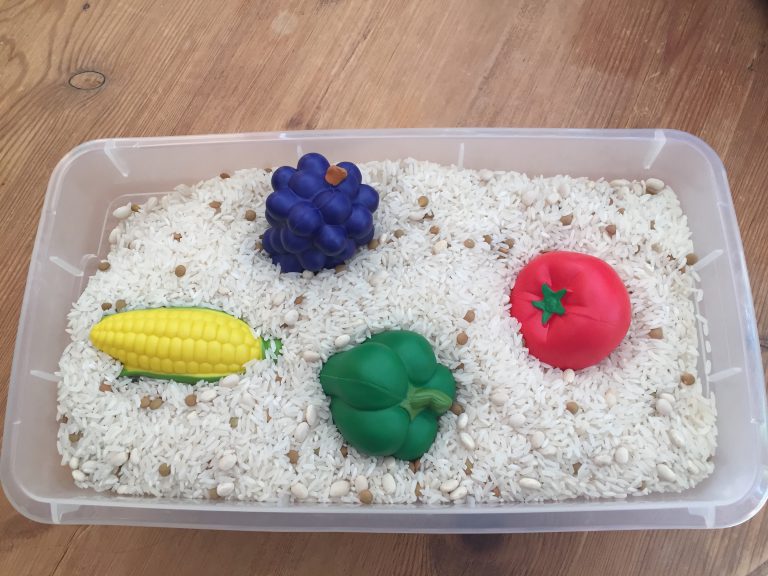
A bowl or bin of uncooked rice is a fun way to work on what we call object permanence. Object permanence means understanding that if something goes out of sight, it still exists. At the same time, you can work on the concept of “where” by hiding an object or toy in the rice and then asking, “Where did it go?” When your child digs the hidden object out of the rice, be very enthusiastic, ‘YAY! You found it! Let’s hide it again. Where did it go?” Of course, if your child is still at the stage of putting everything in her mouth, be careful not to let her eat any of the uncooked rice.
11. PRETEND PLAY ROUTINES IN THE KITCHEN
When you are starting to work on pretend play, feeding is a great thing to pretend with a doll or stuffed animal. This is because it’s something with which your child will be very familiar. You can bring a doll to the table when your child is finishing her dinner and make baby crying noises pretending that the baby is hungry. Then, use a child’s spoon and bowl or a toy bottle and say something like, “Oh no. Baby’s hungry. Let’s feed the baby!” Then, help the child to feed the baby.
Your child might think it’s fun to feed Mommy too. You can lean forward and open your mouth and say, “Feed mommy?” If she does it say, “Thank you for sharing! Mommy is so happy!” or just “Thank you!”
When you’re working in the kitchen, let your child play near you when you can, with her own little pot and spoon. That way, she can pretend to do what you’re doing. This will help her get the idea that pretend play starts by imitating adult actions. You can also work on language by labeling her actions, like “mix, mix” as she stirs her pot, or labeling and demonstrating “fast” and “slow” as you mix with her or show her how to bang the spoon on the pot fast or slowly. Any time you say ‘fast’ or ‘slow’ or ‘mix’ and she does what you say, cheer for her or praise her with a big smile. For example, “THAT’s going fast – what a good drummer!”
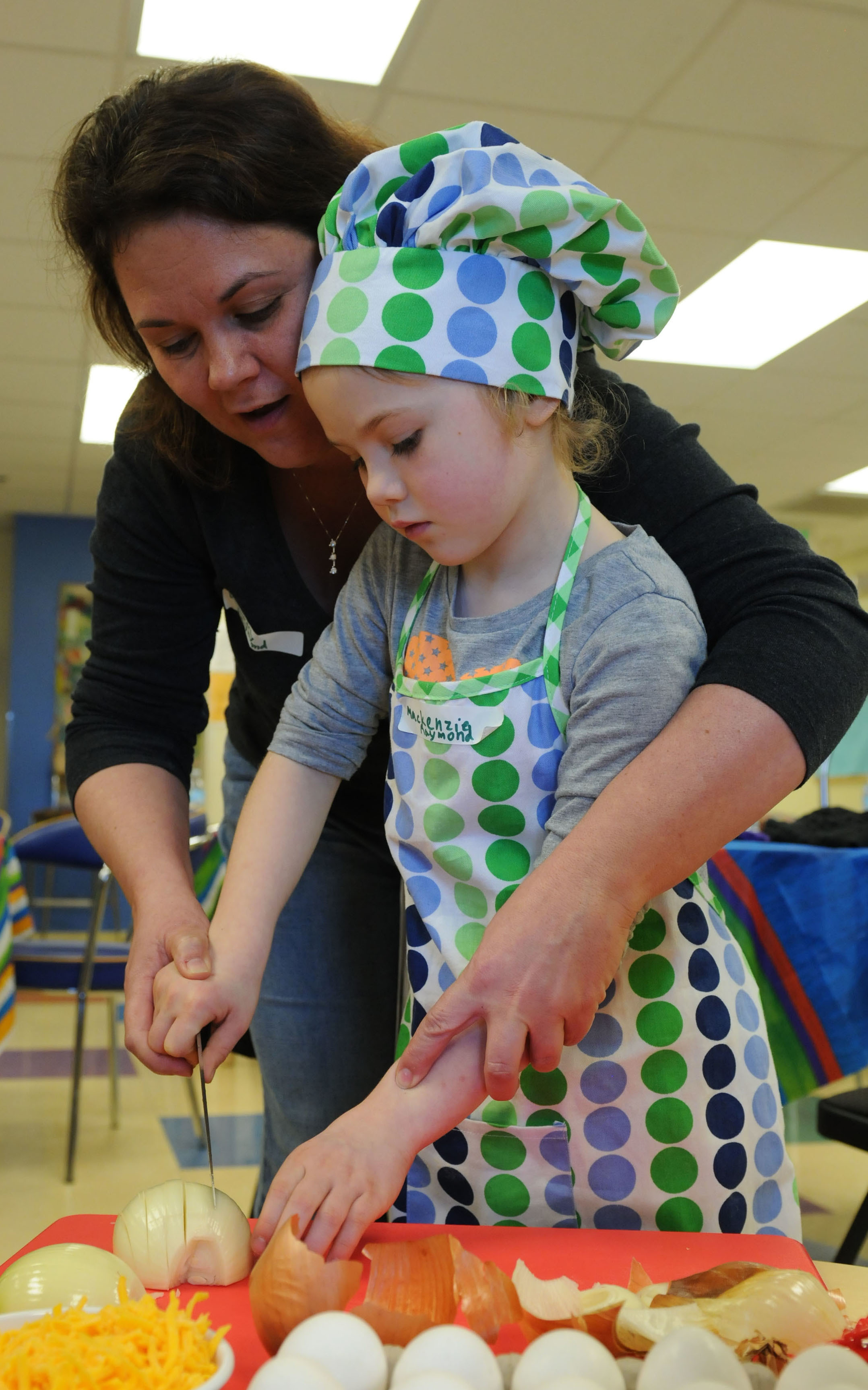
If your child can imitate several actions in a row, set up some toy pots and pans in the kitchen so that your child can “cook” while Mommy cooks. If you don’t have toy pots, pans, or cooking utensils, just use one or two small pots or pans and a wooden spoon. Help your child to stir the pretend food in her pot while you do the same with yours. Pretend to taste her yummy cooking and offer her a taste of yours. Ask her what she will add next to her pot.
For example, if you are making a stew, have her pretend to add carrots and potatoes to her pot while you add them to yours. If she has difficulty pretending these things, try using toy food or small pieces of real food to put into her pot. If you happen to have a toy kitchen the real kitchen is a great place to keep it if you can make room for it there.
At first, you may need to do a lot of prompting and reinforcing of her pretend cooking. If you pretend to eat her food, and find it absolutely delicious, that may be the biggest reinforcer of all. And if your child begins to enjoy pretending to cook while you cook, her play will keep her busy right nearby for a while so that you can get a meal prepared.